

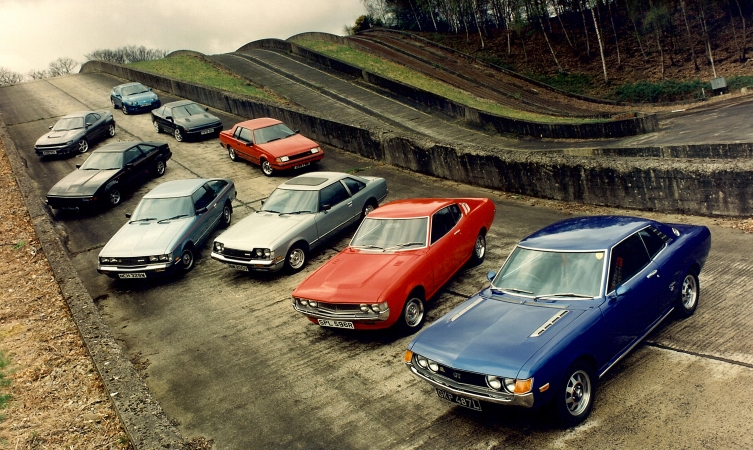
The Toyota Celica was one of the most important sports cars in our history. Introduced in 1970, it brought together sporty styling, accessible performance and everyday usability in a way that helped make it a global success. Over seven generations and more than three decades, the Celica evolved from a stylish two-plus-two coupé into a formidable rally machine and a sophisticated front-wheel drive sports car.
Its story is also closely connected to Toyota’s performance heritage. From numerous successes in international rallying to the legendary GT-Four, the Celica helped establish Toyota as a serious force in motorsport.
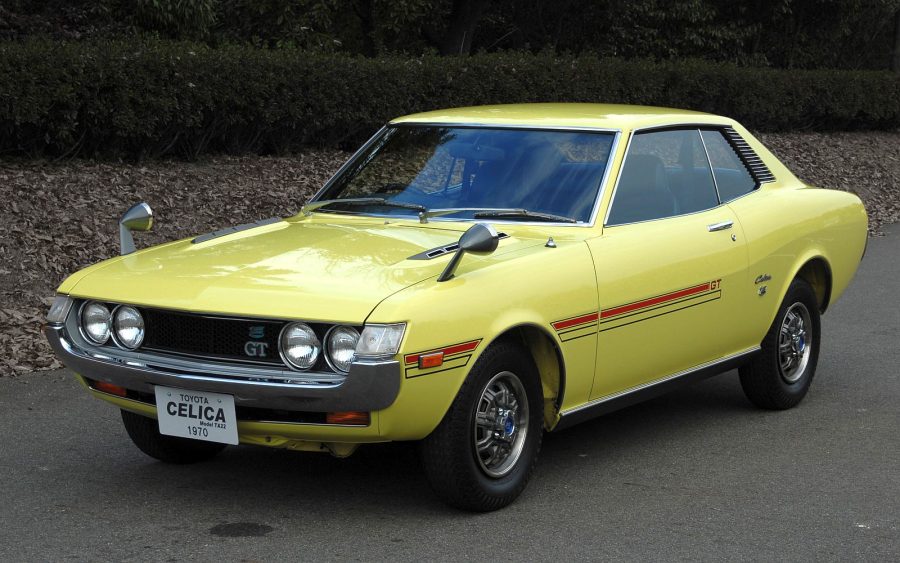
This is the history of the Toyota Celica, from its introduction in 1970 to the end of production in 2006.
Key takeaways
- The Toyota Celica was introduced in December 1970 and produced across seven generations
- Its appeal came from combining sports car styling and performance with everyday usability
- The Liftback body style was introduced in 1973, broadening the Celica’s practicality and appeal
- The Celica developed a strong motorsport reputation, particularly in international rallying
- One of the most famous Celica variants was the GT-Four, which introduced turbocharged power and four-wheel drive
- Carlos Sainz won the 1990 World Rally Championship drivers’ title with a Toyota Celica, while Toyota subsequently secured WRC manufacturers’ titles in 1993 and 1994
- More than 4.1 million Celica models were produced before production ended in 2006
What is the Toyota Celica?
The Toyota Celica was a sports coupé designed to combine performance, style and everyday usability. It first appeared in 1970 and was developed as an accessible alternative to more specialised and expensive sports cars. As such, it helped create a new type of sporty passenger car for Toyota.
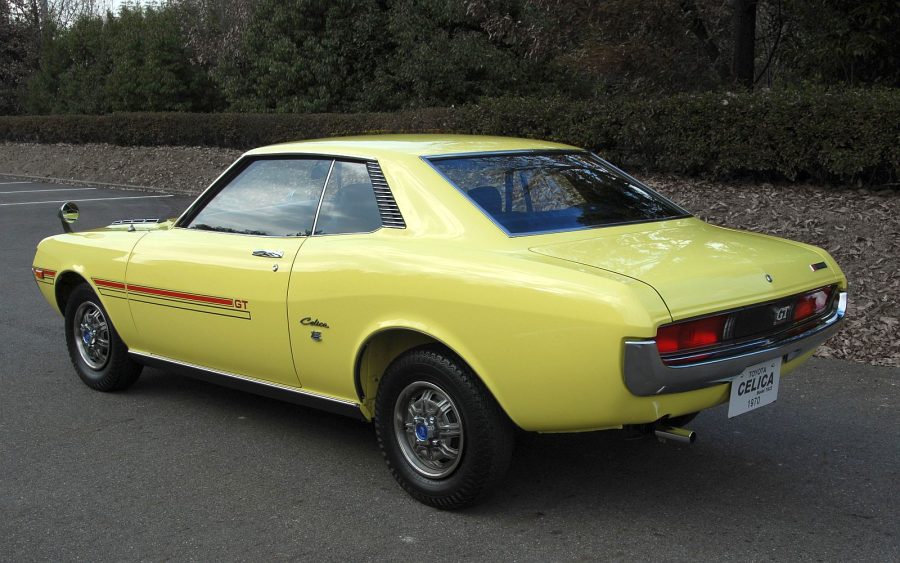
From the beginning, the Celica was designed with international markets in mind. Its styling, range of engines, practicality and quality of construction helped it gain widespread popularity.
The formula proved remarkably adaptable. Across seven generations, the Celica changed substantially in appearance, engineering and performance, but retained its central idea: a sporty car that could be enjoyed every day.
Why the Toyota Celica became so popular
The Celica arrived at a time when buyers were increasingly looking for cars that could be practical during the week and entertaining at the weekend.
In the United States, so-called “pony cars” such as the Ford Mustang and Chevrolet Camaro demonstrated the appeal of combining sporty looks with greater practicality than traditional sports cars. Toyota responded with an interpretation of this idea, creating a compact coupé with distinctive styling, a choice of engines, and enough space and usability for everyday driving.
The approach worked. Toyota passed the one-million production milestone in March 1977, only six years and four months after the first Celica left the production line. Overseas customers accounted for around 60% of these sales, which underlined the model’s international appeal.
The Celica also offered something that would become increasingly important to its identity: genuine sporting ability. From a growing presence in motorsport to consistent incremental improvements throughout its life, the Celica evolved from a stylish coupe into a performance name in its own right.
Toyota Celica generations explained
First generation: 1970-1977
The history of the Toyota Celica began in December 1970 when the new two-plus-two coupé was introduced to the Japanese market. It was positioned as an accessible sports car, combining distinctive ‘pony car’ inspired styling with the comfort and usability expected of a modern passenger car. This latter quality was assured by the model sharing its underpinnings with Toyota’s family friendly – and equally brand new – Carina saloon. A Liftback model followed from April 1973.
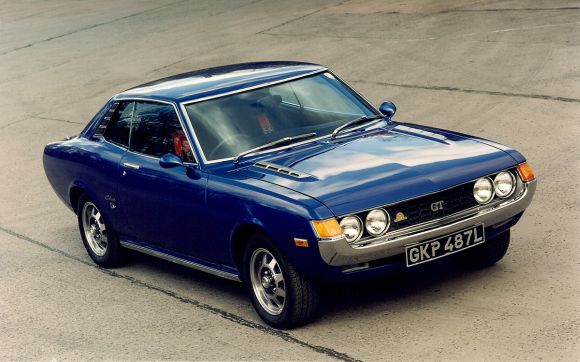
The quality and consistency of the Celica’s manufacturing was of particular note, becoming the first Japanese car to use state-of-the-art robotic assembly to elevate it above its contemporaries. And Toyota’s aim for Celica to become a global sales success was clearly indicated by the fact it was one of the first Japanese cars to comfortably accommodate people with six-foot frames.
For the domestic Japanese market, Celica was available with a range of engines from Toyota’s T-series family, ranging in capacity from 1.4 to 1.6 litres. Breathing through twin Solex carburettors, the twin-cam 2T-G was the most powerful in the range, producing 115bhp.
Overseas, Toyota used the Corona’s familiar 1.9-litre engine for US-spec Celicas, and European cars were fitted with two middle-ground 1.6-litre T-series engines. Later in the car’s life, the worldwide engine line-up expanded to include 2.0- and 2.2-litre R-series engines, with the top 18R-G version offering up to 145bhp. That range-topping model remains a highlight in Celica history among classic Toyota enthusiasts.
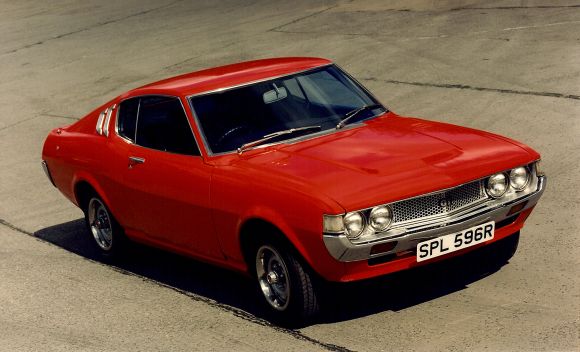
Ensuring the new car was comfortable and easy to use was the development team’s main priority. But they also engineered the car with superb handling, specifying independent front suspension and a four-link rear setup with separate dampers. A GTV model with sports suspension, built solely for the Japanese market, made further improvements, notarised by a number of race victories in domestic motorsport.
On the other side of the world, Celica’s early efforts in European rallying led directly to the formation of Toyota Team Europe (TTE), while numerous British Touring Car Championship successes kept UK sales bubbling.
Second generation: 1977-1981
Halfway through 1977, the success of Celica was evidenced by production of the millionth unit. And sales showed no sign of slowing. Yet just three months later, in August 1977, the second-generation car was revealed. It was longer and wider than its predecessor and could accommodate five occupants, while retaining coupé and Liftback body styles. Equipment levels were increased and comfort was improved, yet the car was lighter in weight despite the larger dimensions.
An expanded range of T- and R-series engines were employed in the new car, all of which were modified and updated to comply with new emissions requirements.
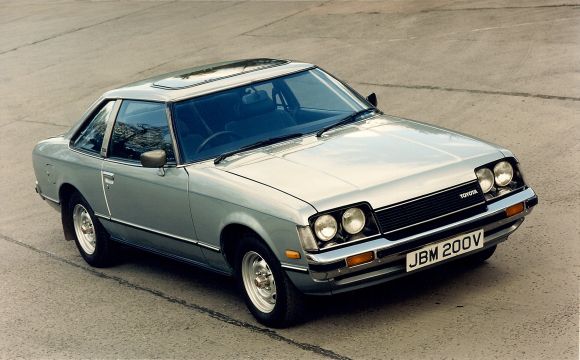
Existing Celica owners trading up to the new model would have felt immediately at home. The motoring press agreed, with contemporary roadtesters often commenting that it still felt very much like a Celica. And with its greater practicality, improved refinement and better driving dynamics, Toyota had addressed virtually aspect of the earlier model that required attention.
In a single generation the model had matured into a car capable of crossing continents, an attribute that hadn’t gone unnoticed by owners. To meet the growing number of requests for a more powerful, grand touring version, Toyota launched the six-cylinder Celica Supra.
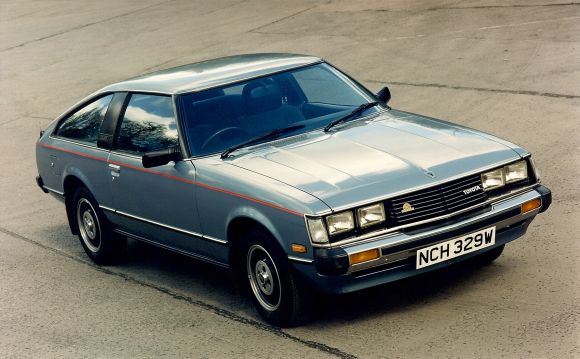
A little over two years after its UK launch in January 1978, the Celica was given a mild facelift that included modern styling elements like quad rectangular headlights and a horizontal grille arrangement.
This official update from Toyota coincided with the launch of the Griffith Sunchaser and Targa models, unofficial convertible and targa-top versions. Built for Griffith by Aston Martin Tickford, a combined total of only 20 examples were delivered into the UK market; sales figures that may have had something to do with the fact that Toyota had already announced a new third-generation model waiting in the wings.
Third generation: 1981-1985
The third-generation Celica arrived in Japan in July 1981 with one of the most distinctive designs yet. Its straight-edged, aerodynamic shape and semi-retractable headlights gave the car a futuristic appearance – further underlined by a digital instrument panel and even an early navigation system on some models.
Buyers in Japan had 20 different versions to choose from (plus another seven for the Celica Supra), including the option of Japan’s first mass-production twin-cam turbocharged engine. The slimmer UK range launched in February 1982, featuring the same all-independent chassis set-up but allied to a cheaper disc/drum brake package and proven two-litre engine. This combination have the new Celica an affordable starting price given the generous overall equipment levels.
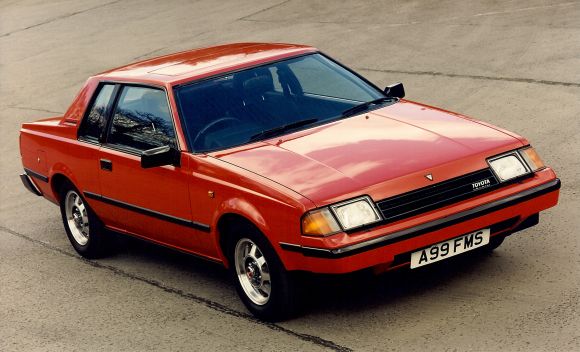
This generation made a significant impact in motorsport. Despite forthcoming regulation changes that meant it would only have a short competitive lifespan, TTE switched its efforts to the new-generation car. Equipped with the outgoing car’s storming twin-cam engine, the new Celica made an instant impression. It won its first event and helped Toyota secure fifth place in the 1982 World Rally Championship (WRC).
The following year, a new Group B car emerged from TTE’s workshops which utilised a 370bhp version of the turbocharged engine used in domestic models. Though it delivered power through two wheels rather than four, the Celica Twin-Cam Turbo (also known by its TA64 chassis code) was immediately competitive and crowned ‘King of Africa’ after winning three-quarters of the continent’s rounds in four years.
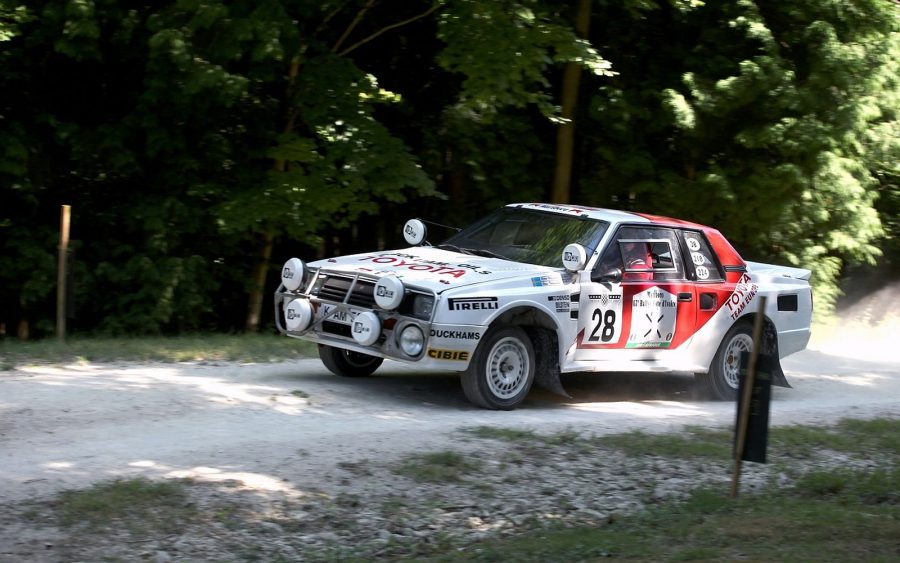
A facelift in August 1983 gave this generation Celica a neater, pop-up headlight arrangement and a revised rear lens treatment, though it wasn’t until February 1984 that this update filtered through to UK cars. Around the same time, an official convertible version was launched in the States, developed by the American Sunroof Company (ASC). Historically, drop-top versions of Celica had not been commercially successful but this was a quality product that forged a long association between Toyota and ASC.
Fourth generation: 1985–1989
The fourth-generation Celica launched in August 1985 was a marked departure from its predecessors, the most significant difference being a switch to front-wheel drive. Developed with a clean-sheet approach, its smooth, aero-efficient design language bore no sign of being derivative of the past. It also had a new mechanical layout that allowed the forthcoming third-generation Supra to stand independently within Toyota’s sporting range.
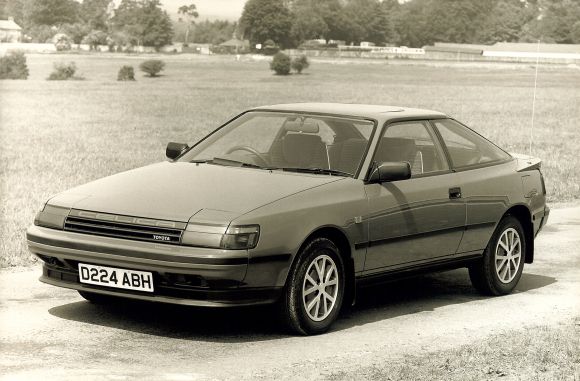
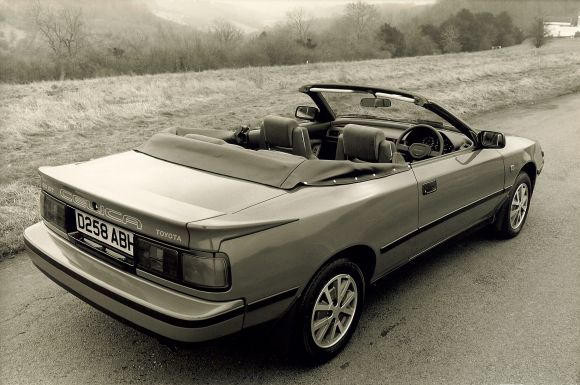
Produced as a three-door Liftback model in Japan and Europe (North America also got a two-door coupé that later provided the foundation for an ASC-engineered convertible), the new car was powered by a range of four engines – single-cam 1.8-litre or 2.0-litre engines in base models, the familiar mid-range 1.6-litre 4A-GE twin-cam, and a new 2.0-litre 16-valve twin-cam 3S-GE flagship unit with an equalised (square) bore and stroke of 86mm. The suspension was totally redesigned to suit the new transverse powertrain layout, introducing MacPherson struts all round.
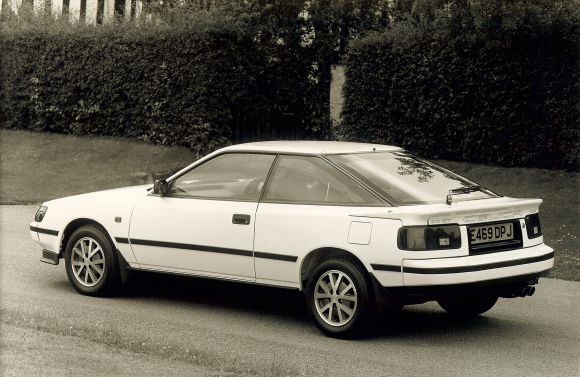
Just one model was initially available in the UK market, equipped with a high-spec 2.0-litre unit that delivered 147bhp through either a five-speed manual or four-speed automatic transmission.
But then in October 1986, Toyota announced the launch of a flagship GT-Four model (also known by its ST165 chassis code) with a new 3S-GTE engine, a turbocharged and water-intercooled development of the high-performance 3S-GE. Its 185bhp output made it the most powerful 2.0-litre engine in Japan. This degree of power, when distributed to all four wheels via a central differential, also made it a perfect rally car.
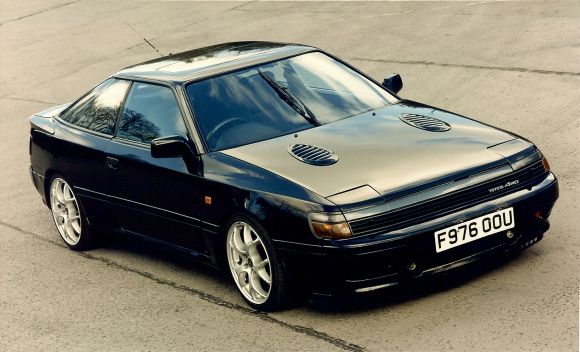
The UK launch of the GT-Four was delayed until March 1988, as the unleaded fuel it required was not readily available until then. This neatly coincided with the Group A car’s debut in the WRC. It was Toyota’s first serious challenger for the championship crown, and the works TTE team entered every event in the WRC calendar from then on. The best results came in 1990 when Carlos Sainz won Toyota’s first driver’s title and Toyota took second place in the manufacturers’ championship.
Fifth generation: 1989-1993
The fifth generation Celica was announced in Japan and Europe in September 1989, while its predecessor was still strutting its stuff in world rallying. The new car shared the same platform and wheelbase as the outgoing model but was fractionally longer and taller to balance the shape. Its design was smoother and more organic, and it was appreciably lighter and quieter than before.
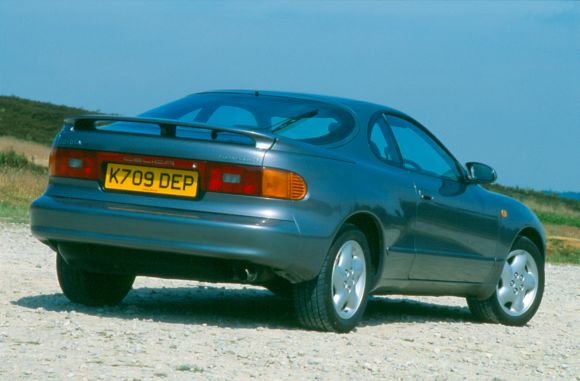
Power for domestic models came from three varieties of 3S-series engines, all with 2.0-litre capacities and tweaked to improve power and responsiveness. The top-spec 3S-GTE now featured an air-to-air intercooler and a twin-entry turbocharger with a ceramic turbine wheel, which at 225bhp once again made it the most powerful of all 2.0-litre production engines. Meanwhile, the naturally aspirated 3S-GE used a new variable induction system and a stainless steel exhaust manifold to give it an extra 25bhp and 14lb/ft. Both of these engines featured in UK-spec cars that became available in early 1990.
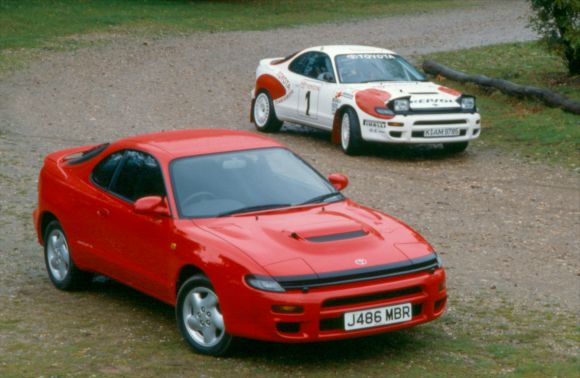
North American and European versions of the GT-Four (also known by its ST185 chassis code) were based on a new wide-body version that was added to the domestic range in August 1990. Sitting 55mm wider than the standard Celica, it allowed larger 15-inch alloy wheels and 215/50 tyres to be specified for improved grip. A year later Japan adopted this body for all GT-Four models. But the ultimate version of the fifth-generation Celica was probably the GT-Four RC (Rally Competition) homologation special of September 1991, which also formed the basis for the limited edition (only 440 produced) Carlos Sainz model for the UK market.
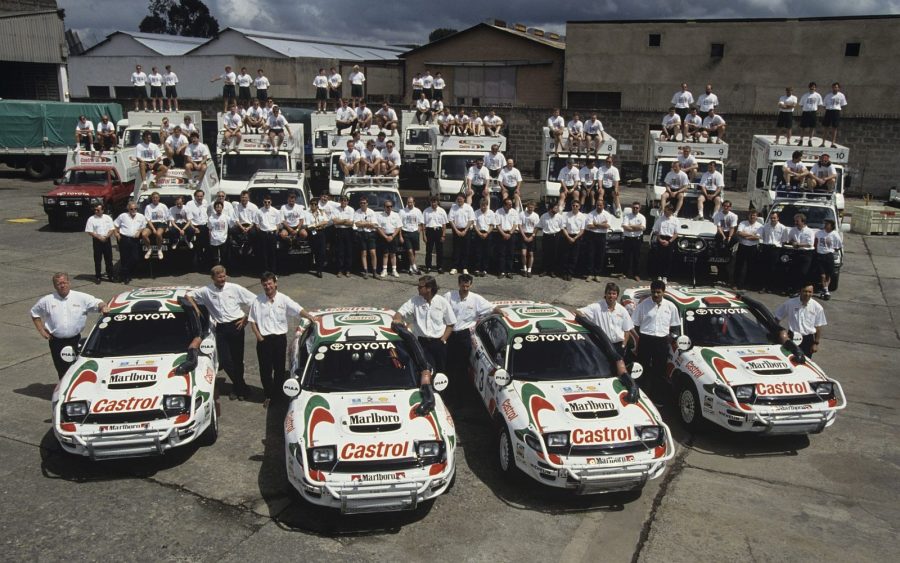
The launch of this special edition was made all the sweeter when Sainz clinched the driver’s championship on the year of the car’s debut. But it was the WRC campaigns of 1993 and 1994 that are best remembered, when Toyota won the championship titles outright.
Sixth generation: 1993-1999
From the beginning of its life, Toyota had usually stuck to a four-year production cycle with a mid-life refresh halfway through. This turnover meant that new model development often started soon after the launch of the current generation. In the case of the sixth-generation Celica, work began back in the spring of 1990. Hundreds of proposals were evaluated, with the aim of giving the next car a more distinctive face.
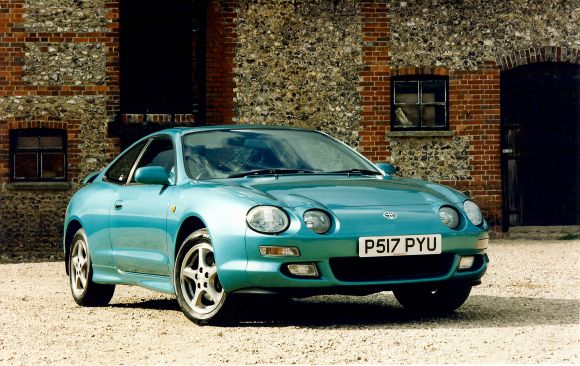
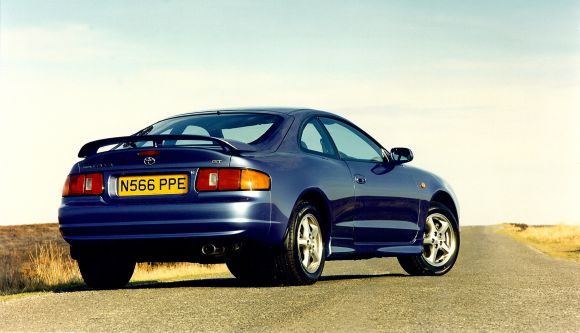
Once again built around a purpose-built coupé formula, the new car borrowed styling cues from the recently launched Mk4 Supra and was the first Celica in many years not to feature pop-up headlights. Engineering advances allowed the bodyshell to be fractionally bigger, substantially stronger, yet around 90kg lighter than before.
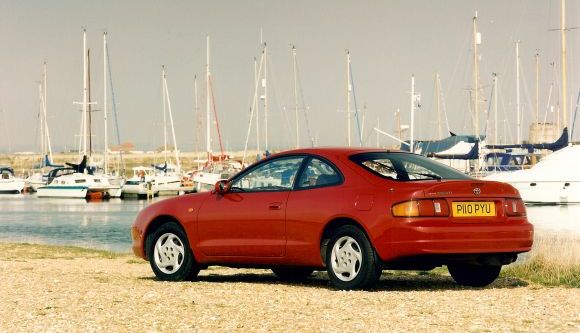
Engine options and the MacPherson strut/dual link chassis setup were largely carried over, though ABS was now offered as an option on all models. Some markets later included a 1.8-litre model that provided a temptingly priced entry into Celica ownership.
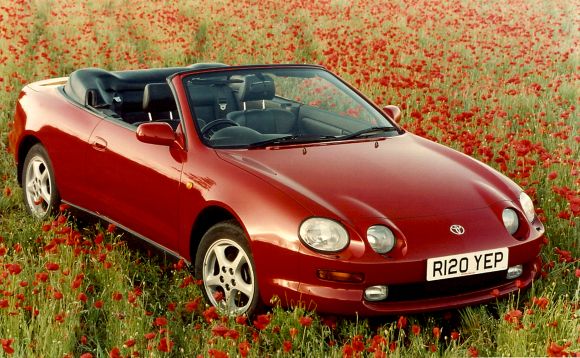
In February 1994, a little over a year after the car’s launch, the GT-Four (also known by its ST205 chassis code) was reintroduced to the domestic market with the aim of providing Toyota with another WRC title – which duly occurred when Toyota won the manufacturers’ championship that year and driver Didier Auriol took first place in the drivers’ championship.
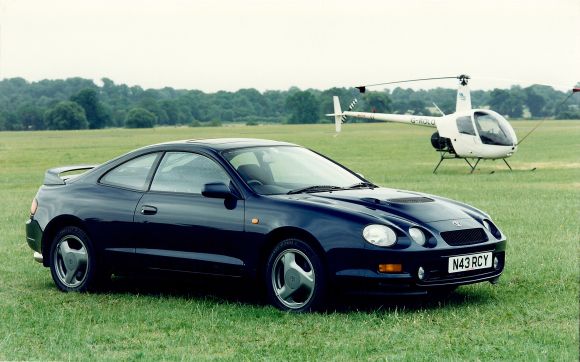
New valve timing and further alterations to the road-going GT-Four’s turbo and intercooler arrangement yielded more power gains, increasing output by another 30bhp to 255bhp. This allowed it to rocket to 60mph in just 6.1 seconds and continue to a maximum speed of 153mph. Sensibly, the brakes were extensively uprated and included lateral G-sensors so the braking effort of individual wheels could be more effectively controlled.
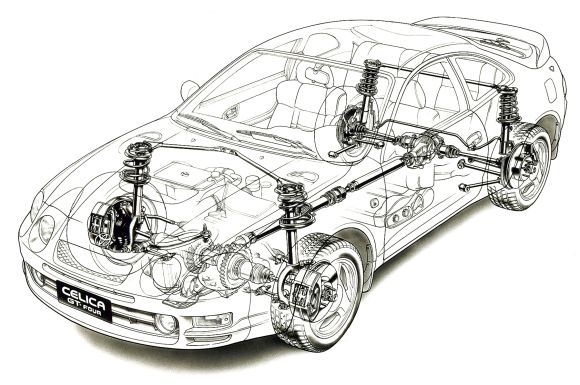
The UK market initially received just one Celica model from March 1994 onwards – the 173bhp 2.0-litre GT. This decision was vindicated by the fact the car perfected the trick of being both quick (0-60 in 7.9 sec) and surprisingly frugal (up to 45mpg). While praise was effusive for the naturally-aspirated Celica, some magazine road testers in the UK found the new GT-Four a little too refined, though did admit that it improved the harder you pushed it, and was preferable over long distances compared to other rally-derived machines.
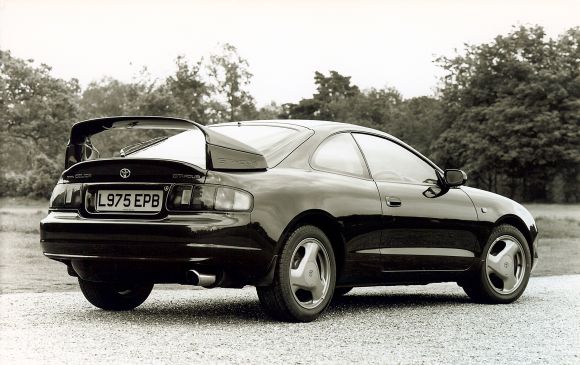
September 1996 saw the end of UK sales of the Celica GT-Four, around the same time as the fourth-generation Supra was deleted from the market. Meanwhile in motorsport the smaller Corolla had swiftly become Toyota’s weapon of choice for the WRC. Minor changes for the 1997 model year became the swansong specifications for the sixth-generation Celica, with many markets selling the last fully-loaded cars right up until the switchover to the long-awaited new machine.
Seventh generation: 1999-2006
The striking Toyota XYR concept car shown at the 1999 Detroit Motor Show offered the strongest possible hint at the design of the forthcoming seventh-generation Celica. Virtually indistinguishable from the concept, the production car made its world debut in September that year, shortly before Toyota announced it had produced its 100-millionth vehicle.
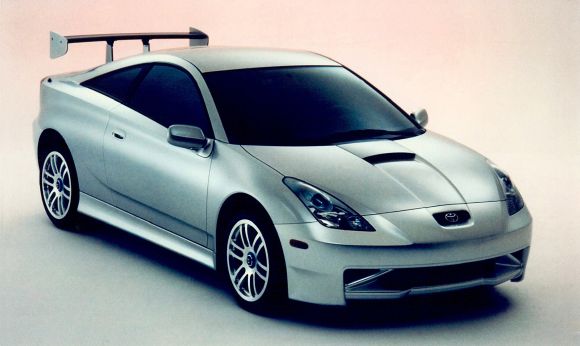
The project was managed by Tadashi Nakagawa, the man also responsible for the third-generation MR2. He showed a similar engineering direction: weight reductions, smaller and lighter components, and razor-sharp handling. The new Celica debuted a duo of new 1.8-litre engines co-developed with Yamaha, offering variable valve timing (VVT-i) and a top-spec version with a second high-lift camshaft lobe that engaged at higher revs (VVTL-i). This latter unit was one of only a handful of powerplants that offered a specific output of more than 100bhp per litre.
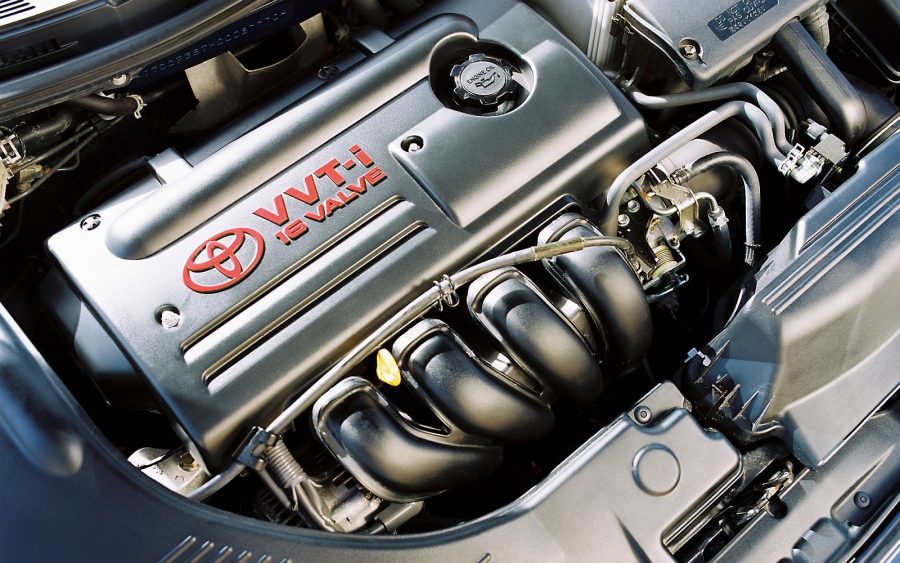
Unlike any other Celica before it, only one coupé body type was offered; it never evolved into convertible or four-wheel drive variations. This clearer focus allowed the development team to concentrate on making the body structure as light as possible, while smaller displacement engines also offered the opportunity to fit a smaller fuel tank. The result was a car with a shorter body and longer wheelbase, tipping the scales at just 1,090kg in base trim.
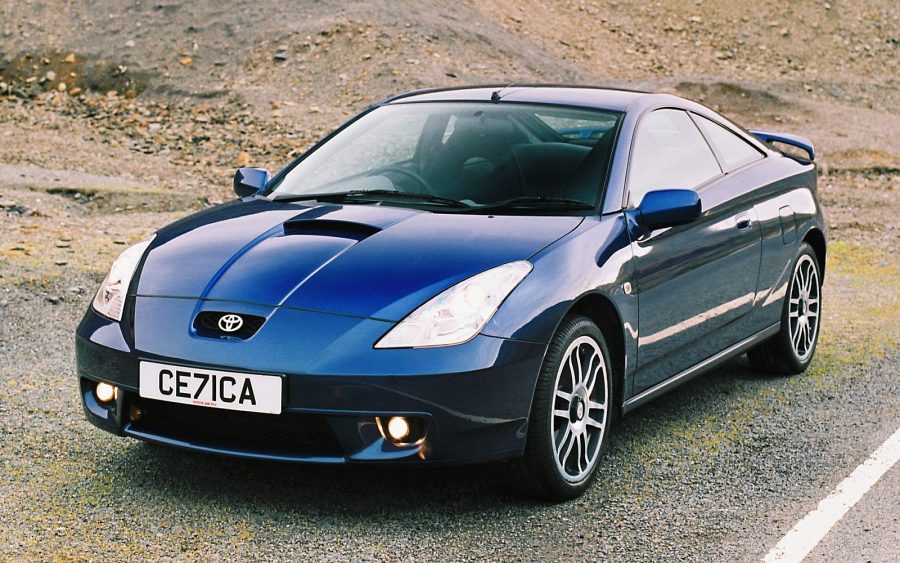
European sales began in November 1999, initially only with the lesser 140bhp 1ZZ-FE engine, but joined almost a year later by the 189bhp 2ZZ-GE engine in the guise of the Celica 190. This car was gradually phased out of the UK line-up after a new flagship T Sport model was launched in August 2001 with unique alloy wheels and larger front brakes.
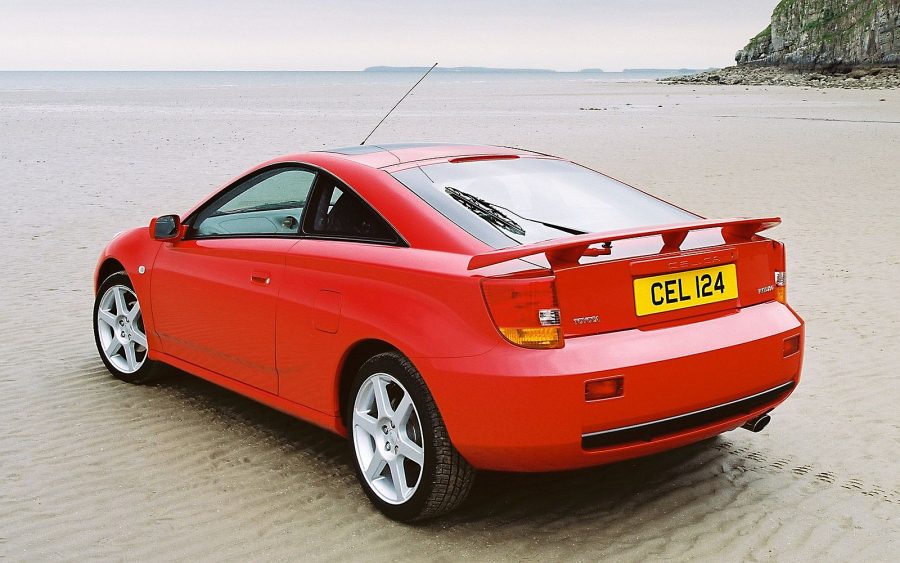
In line with Toyota’s normal procedure, a midlife facelift came a couple of years into the production run, this time ready for the 2003 model year. Thanks to careful management of the stock of run-out cars, Britain received the updated version at the same time as Japan and North America. Yet despite buoyant sales assisting Toyota to its tenth straight year of record UK sales, there was no escaping the worldwide trend away from sports cars.
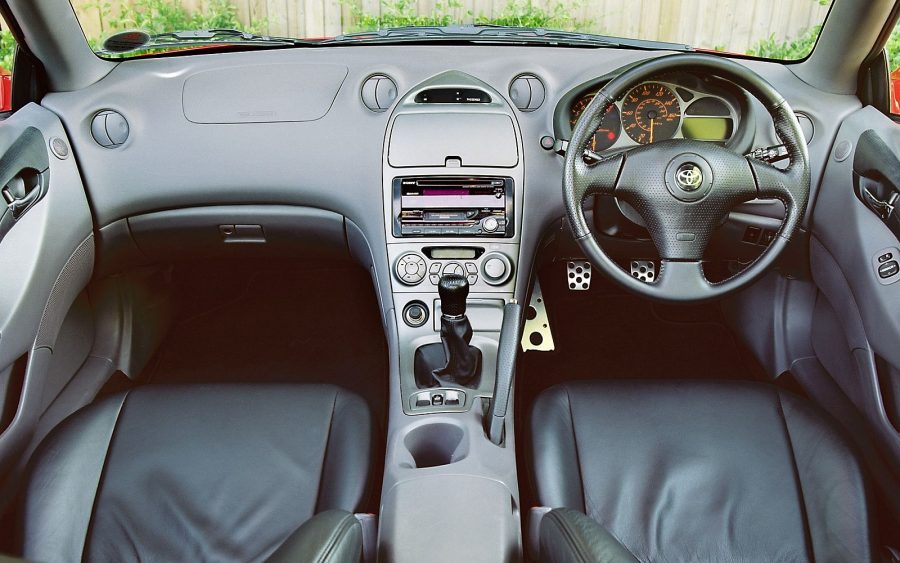
In the face of this movement, Toyota had no choice but to discontinue the Celica in North America in the summer of 2004. UK sales continued with reasonable vigour, especially with the attraction of a special edition GT variant with lowered suspension, surprisingly wild aero package, and dedicated 17-inch alloy wheels. But the death knell tolled in January 2006 when tough new emissions regulations were announced. To engineer compliance would have been prohibitively expensive, so production officially ceased in Japan in April 2006.
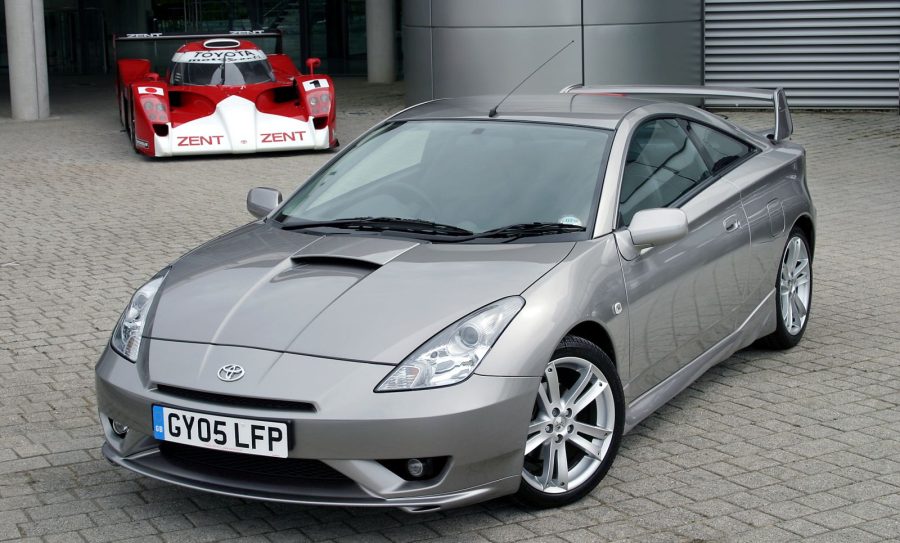
From its introduction in December 1970 to its final bow more than 35 years later, Celica production reached the epic heights of 4,129,626 units.
Toyota Celica generations explained
For anyone discovering the Celica today, the seven generations can be broadly summarised as follows:
| GENERATION | PRODUCTION PERIOD | DEFINING CHARACTERISTICS |
| First | 1970-1977 | Original two-plus-two coupé; Liftback introduced in 1973 |
| Second | 1977-1981 | Larger, more practical and refined |
| Third | 1981-1985 | Sharp styling, retractable headlights and advanced technology |
| Fourth | 1985-1989 | Switch to front-wheel drive; GT-Four introduced |
| Fifth | 1989-1993 | Rounded styling; more powerful GT-Four |
| Sixth | 1993-1999 | Stronger, lighter body; final UK GT-Four generation |
| Seventh | 1999-2006 | Lightweight design, 1.8-litre engines and sharper styling |
The seven-generation story is one of continuous development rather than simple repetition. The Celica repeatedly changed direction to reflect advances in engineering, changing customer expectations and Toyota’s growing ambitions in performance and motorsport.
Key moments in Toyota Celica history
Several moments stand out when looking back across the Celica’s 35-year production history.
- 1970 – The Celica is introduced
Toyota launches the Celica in December as its first Japanese-market specialty car - 1973 – The Liftback arrives
The new body style adds practicality while preserving the Celica’s sporting character - 1977 – One million Celicas produced
Toyota reaches the one-million production milestone after only six years and four months - 1985 – Front-wheel drive arrives
The fourth-generation Celica introduces a completely new front-wheel-drive platform - 1986 – The GT-Four is introduced
Turbocharging and four-wheel drive transform the Celica into a serious performance and rally car - 1990 – Carlos Sainz wins the WRC drivers’ championship
Sainz gives Toyota its first WRC drivers’ title with the Celica GT-Four - 1993 and 1994 – Toyota wins the WRC manufacturers’ title
The Celica plays a central role in Toyota’s consecutive manufacturers’ championship wins - 1999 – Seventh-generation Celica launches
Toyota introduces a lighter, sharper and more focused Celica with new 1.8-litre engines - 2006 – Production ends
After more than 35 years, Celica production officially ends in Japan in April 2006
Toyota Celica performance heritage
The Celica’s performance heritage goes far beyond its most powerful road cars. From the earliest generations, Toyota used motorsport to demonstrate the sporting potential of the Celica. Success in Japanese competition was followed by international rallying, with Toyota Team Europe developing increasingly capable versions of the car.
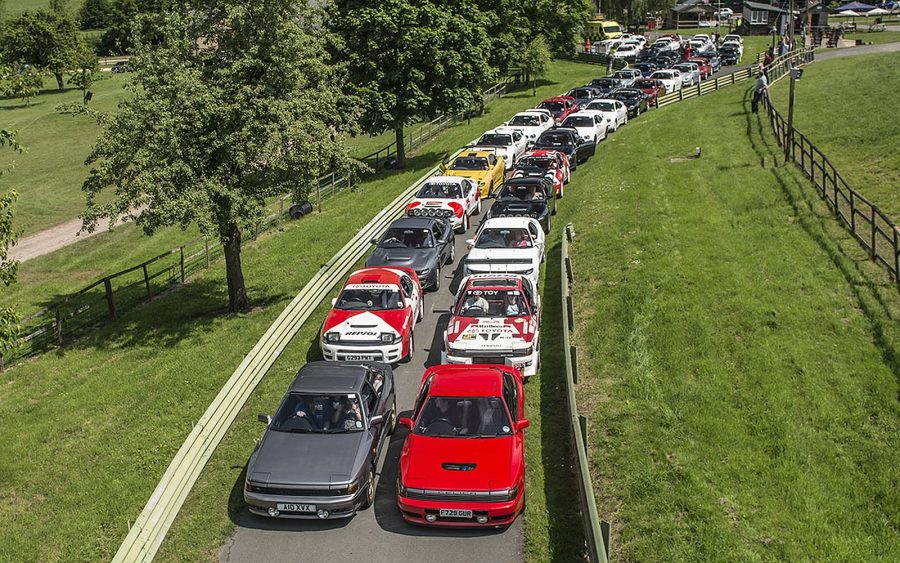
The original Celica GT-Four was particularly important. Turbocharging and four-wheel drive gave Toyota a competitive platform for Group A rallying, while the GT Four based on the fifth-generation car became one of the defining rally cars of the early 1990s. Carlos Sainz’s 1990 WRC drivers’ championship was a landmark achievement. The Celica then helped Toyota secure manufacturers’ championships in 1993 and 1994, with Didier Auriol taking the 1994 drivers’ title.
These achievements established a direct connection between Toyota’s road-going sports cars and its international motorsport programme. The Celica was not simply a sports car with a competition version; competition development became an important part of the model’s identity.
Why the Toyota Celica was discontinued
The seventh-generation Celica remained in production into the 2000s, but the market for traditional sports cars was changing. Toyota ended Celica sales in the United States in 2004 as demand for sports cars declined. UK sales continued for longer, including special-edition models, but increasingly stringent emissions requirements presented another challenge. Toyota concluded that bringing the ageing Celica into compliance with the new requirements was not economically viable.
Production officially ended in Japan in April 2006. By then, the Celica had been in production for more than 35 years and had achieved total production of 4,129,626 vehicles. The end of production marked the conclusion of one of Toyota’s longest-running sports-car stories: seven generations that had evolved with changing technology, customer expectations and motorsport ambitions.
Frequently asked questions about the Toyota Celica
What is the Toyota Celica?
The Toyota Celica is a sports coupé designed to combine performance, style and everyday usability. It was introduced in 1970 and became one of Toyota’s best-known performance models.
When was the Toyota Celica first introduced?
The Toyota Celica was introduced in December 1970 in Japan. Toyota positioned it as an accessible “specialty car”, combining sporty design and performance with everyday practicality.
How many generations of Toyota Celica are there?
There are seven generations of Toyota Celica, produced between 1970 and 2006. Each generation introduced significant changes to the Celica’s design, engineering and performance.
What made the Toyota Celica popular?
The Celica combined sporty styling, accessible performance and practicality. Its international appeal was also strengthened by a wide choice of body styles, engines and equipment, while its motorsport successes gave the model an additional performance identity.
Was the Toyota Celica a sports car?
Yes. The Celica was designed as a sporty coupé and developed increasingly strong performance credentials throughout its history. The GT-Four versions in particular became closely associated with Toyota’s World Rally Championship programme.
What is the Toyota Celica GT-Four?
The Celica GT-Four was the high-performance version of the Celica, combining a turbocharged engine with four-wheel drive. It became the basis for some of Toyota’s most successful rally cars and helped establish the Celica as a motorsport icon.
Did the Toyota Celica win the World Rally Championship?
Yes. Carlos Sainz won the WRC drivers’ championship with Toyota in 1990, while Toyota won the manufacturers’ championship with the Celica in 1993 and 1994. Didier Auriol also won the 1994 drivers’ championship for Toyota.
Why was the Toyota Celica discontinued?
The model was discontinued as demand for traditional sports cars declined and changing emissions requirements made further development of the ageing model uneconomical. Production ended in Japan in April 2006.
How many Toyota Celicas were produced?
Toyota produced 4,129,626 Celicas during the model’s production run from 1970 to 2006.
The legacy of the Toyota Celica
The Toyota Celica’s importance lies in the breadth of its story. It began in 1970 as an accessible sports coupé and developed through seven generations into a model that could represent everyday usability, cutting-edge engineering and serious motorsport performance.
Its combination of style and practicality helped it become a global sales success, while the GT-Four and its WRC achievements gave the Celica a place in Toyota’s performance heritage that extends far beyond its production numbers.
More than three decades after the first Celica appeared, production ended in 2006. By then, more than four million examples had been built, making the Celica one of the defining sports cars in Toyota’s history.
Read more: Toyota model histories
Very interesting and some smashing pictures.
My husband got a 51 plate new for his 40th birthday – then a 53 followed by 55 plate. He was so sad when he went for a 57 plate and found they no longer made them 🙁
I saw a 55 plate Celica Blue in my local Toyota garage just over 2 years ago when my new Yaris was in for a check, and did a swap! Best decision I made in ages, and I won’t change – until I can save enough for a GT86!!!!.
Maybe TOYOTA should have kept the name going.
Classic – love these
Loved my Celica T Sport. Great car 🙂
Bought my red Celica vvtli 190 in 2003 second hand in mint condition had only 6,000 miles on clock, now 10 years on still in mint condition and only has 39,000 on clock, best car I have ever purchased, and still looks better and still knocks the spots off the latest sports coupes of other marques. !!!!!
Hi Graham
Thanks for post and good to hear about your Celica. Sounds like you are looking after a very low mileage mint condition example there. Having driven a Celica 190 I understand exactly where you are coming from. Maybe you should look at joining the Toyota Enthusiasts Club?
Hi there – great article and such a shame they did not bring back the celica name for the gt86!!
I am trying to find out the breakdown of colours for the special edition GT model (how many were chilli red/thunder grey/Sahara yellow/black)? Does anybody know where I could find this information out? Like the 25th VW Golf anniversary made 1800 (300 silver diesel/300 silver petrol/300 red diesel ….and so on)
I suspect Thunder grey most common and probably Sahara yellow least common. And does anybody know how many GT models were made for UK market?
Many thanks – Ian (51 plate T Sport owner for 6 years and in the market for a GT Model)
Hi Ian, thanks for the note and for the question. We have to say, that one has us scratching our heads at the moment! We’ll do a bit of digging and get back to you. Thanks for bearing with us.
Hello Ian
Thanks for your post and good to hear about your Celica T Sport.
We are checking these figures for you. If you can bear with us a bit longer we should be able to confirm the numbers in the new year.
Best wishes.
Great article, I bought a 185 MK 4 in 1996 with only 27,000 genuine miles; fantastic car, 4 half years of brilliant motoring! Rock solid build quality – Toyota certainly don’t make them (and neither does anyone else) like that anymore!!
Thanks for your post Dodge but have you tried the GT86? We recommend a test drive as it might suprise you.
GT86?… Oh, the Subaru with the Toyota badge on it !
Fantastic article, I am funnily the current owner of the celica GT registration SPL in the article, brilliant to see is in its original form, although it has been restored and is now red
I have a late 2006 year Celica GT in chilli red and I am the second owner of it. It has FTSH and the car its self has only ever done 3000 miles a year from new!! I have sent a picture of it on facebook to Toyota UK. I have always loved Celica’s and with my first ever one being a Gen 4 on a C plate. I have owned loads of Jap cars over the years like Impreza WRX STIs and so forth but I have always gone back to Celicas. It’s such a shame that Toyota didn’t keep them going!!! 🙁