


Key takeaways
- A discharged 12V battery may prevent smart entry and other electrical systems from operating normally.
- Most Toyota vehicles include a mechanical back-up key that can be used to unlock the vehicle.
- Vehicles equipped with electronic door-release systems include manual override mechanisms that can be used if electrical power is unavailable.
- The location and operation of manual door releases varies by model. Click this link to see an online version of the owners’ manual for your vehicle.
- If you’re concerned about the condition of your vehicle’s 12V battery, your Toyota retailer can carry out a free battery inspection.
- The information in this article is relevant to Toyota models sold in the UK.
Introduction
While Toyota vehicles are engineered for reliability, like any modern vehicle they depend on a 12V battery to power many electrical systems. If that battery becomes fully discharged, functions such as keyless entry and certain electronic door systems may not operate as normal. Fortunately, most Toyota vehicles include alternative methods for entering and exiting the vehicle if your Toyota won’t unlock. In this guide, we explain what to do if you experience a completely discharged 12V battery and where to find further model-specific information.
Why won’t my Toyota unlock?
If you approach your vehicle and smart entry is not working, in many cases, the cause may be something simple such as a depleted key battery.
However, if the vehicle’s 12V battery is fully discharged, smart entry and other electrical functions may not operate as expected.
The good news is that Toyota vehicles are designed with alternative methods of entering and exiting the vehicle should electrical power become unavailable.
Lost car keys? Click here to read our advice.
What is smart entry on my Toyota?
Smart entry allows you to lock and unlock compatible Toyota vehicles without removing the key from your pocket or bag. It is advisable for the vehicle’s driver to always carry the electronic key.
When operating normally, the vehicle recognises the presence of the smart key via weak radio waves and enables convenient access to the vehicle. If either the key battery or the vehicle’s 12V battery becomes depleted, smart entry may not function as expected.
Before assuming the vehicle’s battery is flat, it may be worth checking:
- Whether the key battery needs replacing. For vehicles with a smart entry and start system, the average life for a battery in a key is between one and two years, regardless of whether the key is regularly used or not. If the smart key’s battery becomes low, an alert will sound in the cabin and a message will be shown on the vehicle’s multi-information display.
- Whether the key is within operating range. In most Toyota vehicles, the system can be operated when the electronic key is within about 0.7 metres (2.3 feet) of an outside door handle. Only the doors detecting the key can be operated.
- Whether there is any potential signal interference nearby from any facility that could be generating strong radio waves or electrical noise. Examples include: TV towers, electric power plants, radio stations, large displays or airports.
- Whether the vehicle has been left unused for an extended period. In some vehicles, if the smart entry has not been used for 14 days or longer, the vehicle might not unlock from any door except the driver’s door. In this case, press the button on the driver’s door handle, or use the wireless remote control or mechanical key (read below for more information) to unlock the doors.
How to enter your Toyota if the 12V battery is flat
Most Toyota smart keys incorporate a mechanical emergency key that can be used when electrical systems are unavailable.
Although the exact procedure varies between models, the process typically involves:
- Removing the mechanical key from the smart key.
- Locating the concealed key lock cylinder on the driver’s door (usually accessible behind a small panel on the door handle).
- Unlocking the vehicle manually. The mechanical key can only be inserted in one direction, as the key only has grooves on one side. If the key cannot be inserted in a lock cylinder, turn it over and re-attempt to insert it.
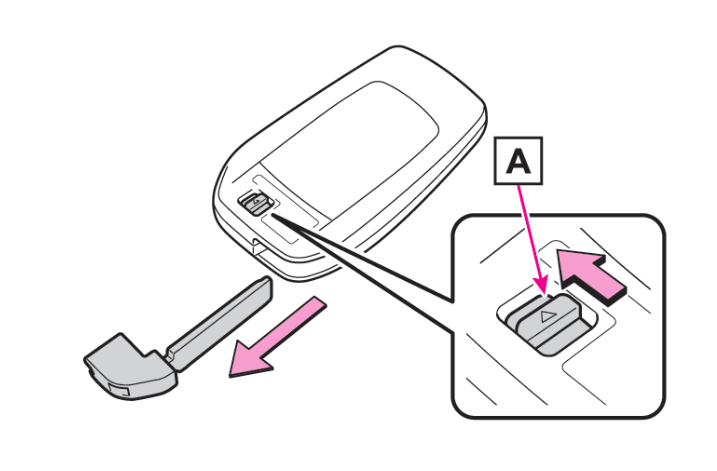
Once inside the vehicle, you may need roadside assistance, a battery recharge or a jump-start procedure depending on the cause of the issue.
Always refer to your owner’s manual for instructions specific to your model of Toyota.
How to exit your Toyota if electrical power is unavailable
Many Toyota vehicles use conventional mechanical interior door handles, which can still be operated even if the 12V battery is discharged.
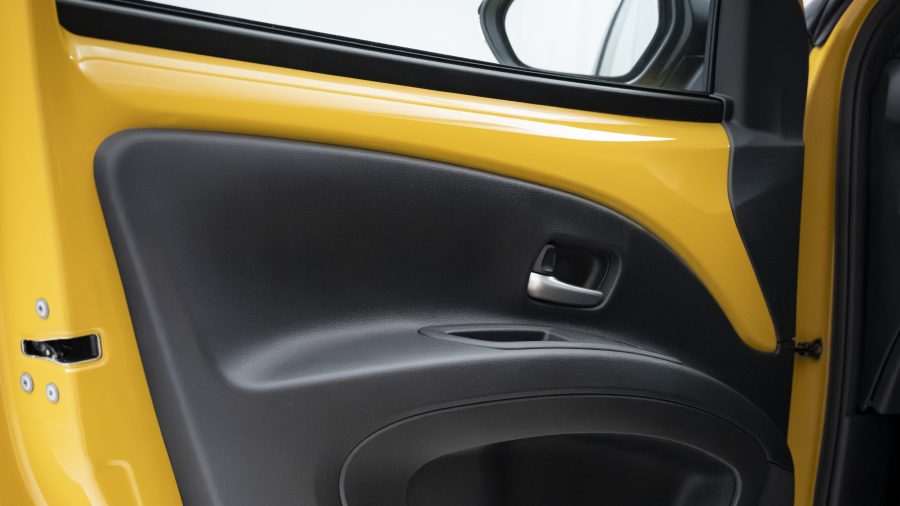
Some newer vehicles may be equipped with electronic door-release systems. Vehicles equipped with these systems also incorporate manual override mechanisms that allow occupants to open the doors if electrical power is unavailable and your Toyota won’t unlock.
The location and operation of these manual releases can vary by model, so owners should familiarise themselves with the relevant instructions in their handbook.
Smart entry and emergency door access by model
| Model | Smart entry available?* | Electronic door-release system fitted?* | Manual entry method if needed | Manual exit method if needed |
| Aygo X Hybrid | Excel, GR Sport grades (optional on Design grade when Parking Pack specified) | No | Mechanical key (Icon); Mechanical key in fob (Design when Parking Pack specified, GR Sport, Excel) | Standard manual door release |
| Yaris | Design, GR Sport, Excel grades | No | Mechanical key (Icon); Mechanical key in fob (Design, GR Sport, Excel) | Standard manual door release |
| Yaris Cross | Icon, Design, GR Sport and Excel grades | No | Mechanical key in fob | Standard manual door release |
| Urban Cruiser | Icon, Design, Excel grades | No | Mechanical key in fob | Standard manual door release |
| Corolla Hatchback and Touring Sports | Icon, Design, GR Sport and Excel grades | No | Mechanical key in fob | Standard manual door release |
| Toyota C-HR | Icon, Design, GR Sport and Excel grades | No | Mechanical key in fob | Standard manual door release |
| Toyota C-HR+ | Icon, Design, Excel grades | No | Mechanical key in fob | Standard manual door release |
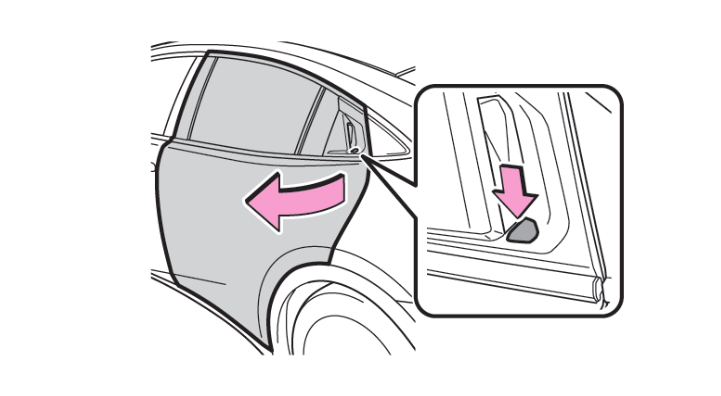
| Prius Plug-in Hybrid | Design and Excel grades | On exterior of rear side doors only | Front – mechanical key in fob; rear – firmly press manual release button at bottom of door switch | Standard manual door release |
| bZ4X | Icon, Design, Excel grades | No | Mechanical key in fob | Standard manual door release |
| bZ4X Touring | Design and Excel grades | No | Mechanical key in fob | Standard manual door release |
| All-new RAV4 | Icon, Design, GR Sport and Excel grades | No | Mechanical key in fob | Standard manual door release |
| Land Cruiser | Invincible grade | No | Mechanical key in fob | Standard manual door release |
| Proace City Verso | Design grade | No | Mechanical key in fob | Standard manual door release |
* Availability correct at the time and date of article publication, but may vary according to model grade, specification and model year.
What causes a 12V battery to discharge?
Like all vehicles, Toyota models rely on a 12V battery to support a range of electrical functions. Battery condition can be influenced by several factors, including vehicle usage patterns, journey type, environmental conditions, electrical demand and battery age.
If you regularly make short journeys, leave the vehicle unused for extended periods or have concerns about battery performance, it may be worth consulting your local Toyota retailer. Read more about caring for your vehicle’s 12V battery – How to care for your car’s 12V battery | Toyota UK
Can Toyota check my battery’s condition?
Yes. Customers who have concerns about the performance or condition of their vehicle’s 12V battery are encouraged to contact their local Toyota centre. Toyota retailers can carry out 12V battery quality inspections and, where appropriate, recommend further action.
Where can I find more information?
Owners’ manuals and user guides for Toyota’s current model range feature can be found at this link.
Frequently asked questions
Can I unlock my Toyota if the battery is completely flat?
In many cases, yes. Most Toyota smart keys include a mechanical key that can be used if keyless entry is unavailable.
Does a flat 12V battery stop smart entry from working?
A fully discharged 12V battery may prevent smart entry and other electrically operated features working normally.
Can I get trapped inside the vehicle if electrical power is lost?
Vehicles equipped with electronic door-release systems include manual override mechanisms that allow doors to be opened when electrical power is unavailable, such as the manual key.
Where is the interior door release located?
The location varies by model. Refer to your owner’s manual for specific instructions relating to your vehicle.
Does a flat 12V battery mean there is a problem with the hybrid battery?
Not necessarily. The 12V battery and hybrid battery perform different functions within the vehicle.
Who should I contact if I need assistance?
If you’re unable to access or start your vehicle, contact Toyota Roadside Assistance, your retailer or Toyota Customer Relations for support. Use our dealer locator to find your nearest centre.
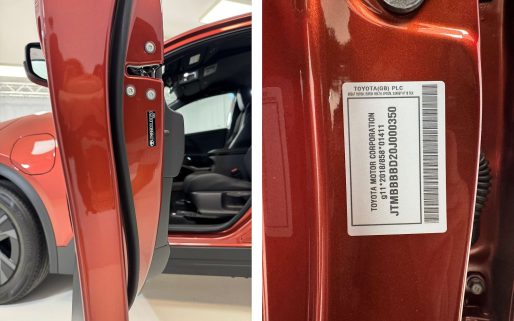



I’m shocked that my Toyota garage couldn’t help I have a system error see manual but I can’t find the picture in my manual it’s an I with O on top then filled in triangle on right side of O touching the top of a car outline. What page do I find help I’ve also lost WiFi it says it’s been disconnected I’m 40 mins from garage and can’t pop over I think I need to buy a Honda as they are nearer. Mine is a 74 plate Yaris
Morning Jacqui,
We’re sorry to hear you’re experiencing problems with your car.
In this instance, it may be best to book your car in for an inspection at your local Toyota Centre so they can diagnose the issue and advise further.
Thank you.