

What does the tyre pressure warning light mean?
The tyre pressure warning light usually means that one or more of your vehicle’s tyres has dropped below the recommended pressure level. The alert is triggered by the Tyre Pressure Monitoring System (TPMS), which is in place to help improve safety, fuel efficiency and tyre life. If the warning light appears, check your tyres and adjust pressures as soon as it is safe to do so.
The yellow symbol which appears on your car’s dashboard looks like the cross-section of a tyre with an exclamation mark inside.
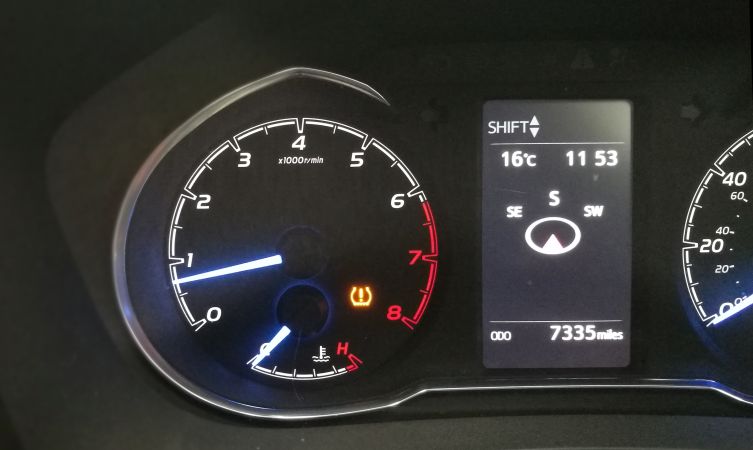
Understanding the tyre pressure warning light
The warning light is an alert message to the driver that there may be a loss of air pressure from one or more of the vehicle’s tyres. It comes from the Tyre Pressure Monitoring System (TPMS), an active safety technology that has become a legal requirement for all newly launched and factory updated passenger cars sold in Europe since November 2014.
Tyres represent the only contact your vehicle has with the ground, so maintaining the correct tyre pressure has many safety and efficiency benefits. These include:
- Preventing accidents caused by a critical decrease in tyre pressure
- Helping the vehicle perform predictably
- Saving fuel and reducing emissions
- Optimising tyre wear
How does a Tyre Pressure Monitoring System work?
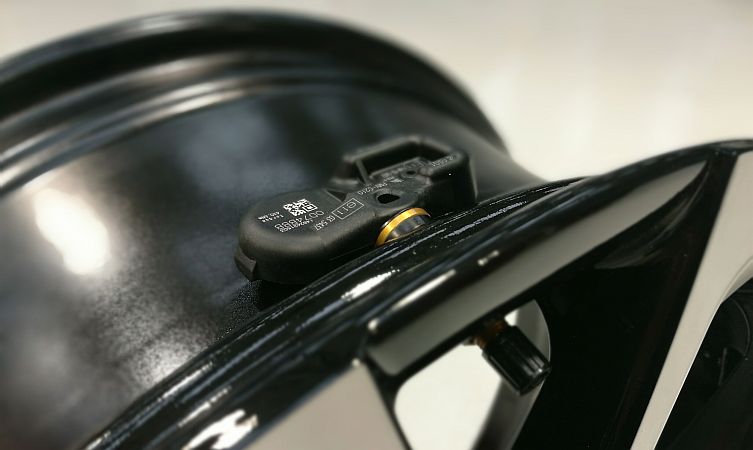
There are two types of TPMS: direct and indirect. Direct systems are installed in the majority of Toyota’s current passenger car line-up, and this method uses a battery-powered sensor integrated into the valve assembly (see images below) to physically measure air pressure from within the tyre cavity itself.
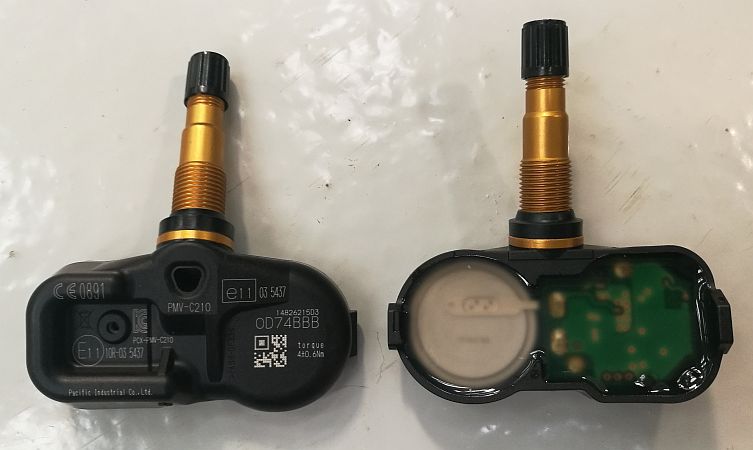
Data from the sensor in each wheel is transmitted wirelessly to a control module connected to the car’s central computer, which prompts a visible alert for the driver if any of the tyres lose pressure. The control module is programmed with the unique serial numbers of the valves within the car’s system. This ensures that the TPMS assembly in each wheel only communicates with its host control module.
The only exception within Toyota’s passenger car line-up is the Proace Verso MPV. This model is equipped with an indirect system, which uses the existing wheel speed sensors within the anti-lock braking system to ‘measure’ tyre pressure by detecting differences in the rate of wheel rotation. A tyre with less air pressure will have a smaller circumference and therefore spin at a faster rate than a wheel that has not lost air pressure.
Data from the wheel speed sensors is communicated directly to the ABS control unit, which prompts a visible alert for the driver if any wheel speed abnormalities are detected.
What should I do if the tyre pressure warning light comes on?
If the tyre pressure warning light comes on, the air pressure in at least one of your tyres will have dropped below a minimum tolerance level – often a deflation of around 20-25%. This may indicate a leak, puncture, or some other kind of damage.
Dramatic changes in ambient temperature, such as driving from a snow-capped mountain to a warm and sheltered valley, can occasionally cause direct systems to prompt an alert until the temperature has stabilised. Similarly, indirect systems can occasionally mistake uneven tyre wear for a fluctuation in tyre pressure.
Irrespective of the circumstances, if the TPMS warning light comes on you should pull into a safe area and visually check the tyres. If any appear to be deflated yet undamaged you should try to re-inflate them to the correct pressure and reset the TPMS (see subheading below).
If the tyre has sustained more serious damage, it will be necessary to either continue your journey on the spare wheel, carry out a temporary repair using a tyre repair kit, or call an emergency breakdown service for a lift to a tyre centre.
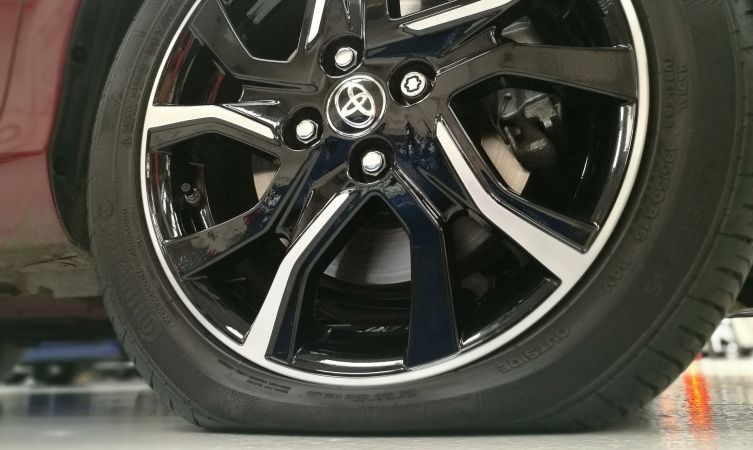


How do I turn off the tyre pressure warning light?
Use the box below to identify the type of TPMS fitted to your car (only current models are listed below). You will also need to know whether the reset function is accessed via a button or sub-menu within the main display.
Once you have accessed the right sub-menu, instructions for resetting the TPMS will be shown within the main display. For those with a physical button, you simply need to turn the ignition on, then press and hold the TPMS button. The warning light will flash a couple of times and then extinguish, at which point the system has been reset.
| MODEL | TPMS TYPE | RESET ACCESS | LOCATION |
| Aygo X | Direct | Software menu | Vehicle Settings menu on Multi-info Display |
| Yaris | Direct | Software menu | Vehicle Settings menu on Multi-info Display |
| Yaris Cross | Direct | Software menu | Vehicle Settings menu on Multi-info Display |
| Corolla | Direct | Software menu | Vehicle Settings menu on Multi-info Display |
| Toyota C-HR | Direct | Software menu | Vehicle Settings menu on Multi-info Display |
| bZ4X | Direct | Software menu | Vehicle Settings menu on Multi-info Display |
| RAV4 | Direct | Software menu | Vehicle Settings menu on Multi-info Display |
| RAV4 Plug-in | Direct | Software menu | Vehicle Settings menu on Multi-info Display |
| GR86 | Direct | Button | Lower dashboard on passenger’s side |
| GR Supra | Direct | Software menu | Vehicle Status menu on Supra Command |
| Land Cruiser | Direct | Button | Under dashboard on driver’s side |
| Highlander | Direct | Software menu | Vehicle Settings menu on Multi-info Display |
| Proace Verso | Indirect | Software menu | Driving Functions menu on Pro-Touch display |
| Mirai | Direct | Software menu | Vehicle Settings menu on Multi-info Display |
What should happen if I replace any tyres?
Direct: The condition and function of the TPMS valve and sensor assembly should be checked each time the tyres are replaced. This will involve a physical inspection and electronic diagnosis using a proprietary technology (example device in image below).
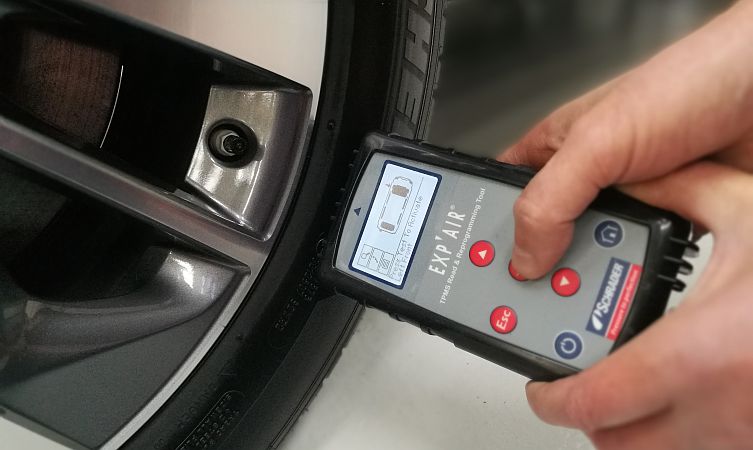
The integrated battery has a life expectancy of around ten years and cannot be replaced. Electronic diagnosis should reveal the health of the battery, which will help you decide whether to replace the entire unit at the same time as the tyre.
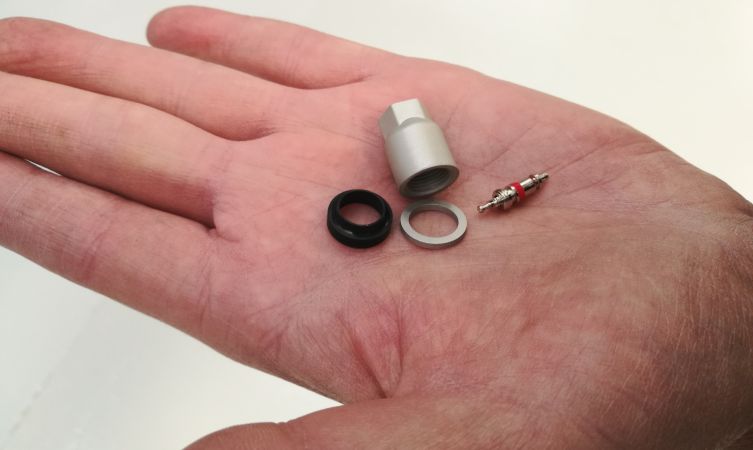
Although the main valve assembly is robust, parts exposed to the atmosphere can deteriorate over time. So if the battery level is adequate and the main unit is being retained, it would still be wise to have the grommets, washers, collars and cores (see image below) replaced as a matter of course.
Indirect: As this system is not directly related to the tyres, no further measures are needed, assuming the tyres are being replaced on a like-for-like basis. However, it is always wise to replace the valves when changing tyres.
Will changing the wheels affect the TPMS?
Not if your car features indirect TPMS measuring. In which case, you can switch to and from winter tyres with no additional system programming.
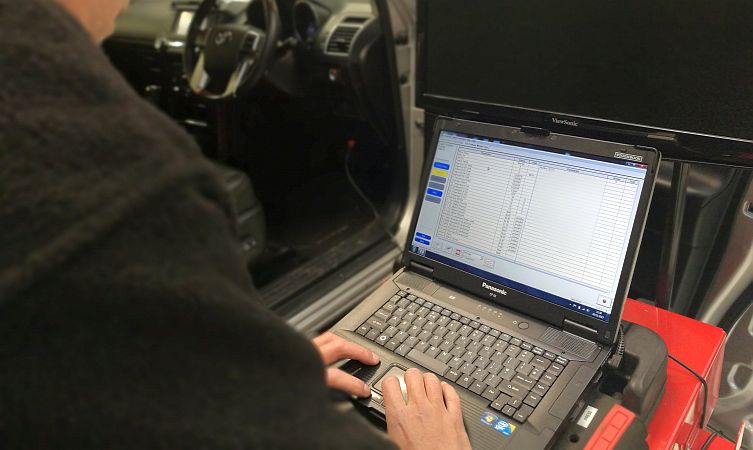
Due to the accuracy and complexity of direct measuring, the TPMS control module is designed to recognise and communicate with only one set of wheels at a time. So if you regularly switch to and from winter wheels it will be necessary for a qualified technician to reprogramme the control module through the vehicle’s OBD port.
There are occasions when it may be necessary to drive on a wheel that is not equipped with a TPMS valve, such as after a puncture when the spare wheel is fitted. Under such circumstances, the warning light will remain illuminated. The vehicle or tyre monitoring system will not be damaged but the vehicle cannot pass its annual MoT test if the warning light is on.
Do I still have to check my tyres manually?
Although TPMS is designed to deliver a safety alert in the event of a significant loss of tyre pressure, it does not replace manual inspections. Each tyre should be regularly checked to see if it is inflated to the correct air pressure and has sufficient tread depth.
Tyre pressure warning light FAQs
Why has my tyre pressure warning light come on?
The tyre pressure warning light usually appears when one or more tyres have lost air pressure and fallen below the recommended level. This can happen because of a puncture, a leaking valve, wheel damage or simply a change in temperature. The warning is generated by the vehicle’s Tyre Pressure Monitoring System (TPMS).
Is it safe to drive with the tyre pressure warning light on?
You should check your tyres as soon as it is safe to do so. Driving with underinflated tyres can affect vehicle handling, tyre wear and fuel efficiency. If you suspect a puncture or significant loss of pressure, do not continue driving until the issue has been investigated.
How do I know which tyre has low pressure?
Many modern Toyota models equipped with direct TPMS can identify which wheel has low pressure via the multi-information display. On other vehicles, you may need to manually check the pressure of each tyre using a pressure gauge.
Can cold weather make the tyre pressure warning light come on?
Yes. Air contracts as temperatures fall, which can reduce tyre pressure. It is not uncommon for the warning light to appear during colder weather, particularly if tyre pressures were already close to the minimum recommended level.
What should I do when the tyre pressure warning light appears?
When safe, stop the vehicle and inspect all four tyres for obvious signs of damage. Check tyre pressures against the manufacturer’s recommended settings and inflate them if necessary. If a tyre repeatedly loses pressure, have it inspected by a qualified technician.
How do I reset the tyre pressure warning light?
On most vehicles, the warning light will switch off automatically once the tyres have been inflated to the correct pressure and the system confirms that all readings are within the required range. Some vehicles may require a manual TPMS reset procedure; consult your owner’s manual for model-specific instructions.
Can a puncture cause the tyre pressure warning light to come on?
Yes. A puncture is one of the most common reasons for a tyre pressure warning light appearing. Even a slow puncture can gradually reduce air pressure enough to trigger the system.
Why is my tyre pressure warning light still on after inflating the tyres?
The system may require a short period of driving before it updates the tyre pressure readings. If the warning light remains on, recheck the pressures and inspect the tyres for hidden damage. A TPMS sensor fault may also require professional diagnosis.
What is the difference between direct and indirect TPMS?
Direct TPMS uses pressure sensors inside each tyre to measure pressure directly. Indirect TPMS estimates tyre pressure by comparing wheel speeds through the vehicle’s anti-lock braking system (ABS). Toyota uses direct TPMS on most current passenger vehicles, while some models use an indirect system.
Do TPMS sensors need replacing?
Direct TPMS sensors contain an internal battery which will eventually reach the end of its service life. If a sensor fails, it may need to be replaced and reprogrammed to communicate with the vehicle’s control module.
To read about tyre checks you can carry out, click here.
Information correct at the time of original publication. The content of this article was adjusted in 2026.


Hi Peter her how do I rest dash bord lite I had the wheels of my Toyota proace and lite has cam on on the dash and how do I reset my clock Toyota proace 200019
My tyre pressure light cannot be reset by pressing the button, when I turn on the engine the flashes for about 1p seconds and then stays on,
Changed 1 valve on tyre and had the fault cleared using computer,
After driving for a day light came back on
Hi Sully,
Thanks for your comment.
If you believe there is an issue, please visit your Toyota Centre so that they can physically inspect the vehicle.
Thanks.
I have a Toyota Avensis Excel Tourer Automatic 2.2D – 2014 (64 plate) model.
Recently I had the alloy wheels refurbished 3 out of 4. One wheel had a new TPMS sensor fitted because the old one couldn’t be removed and had to be cut out by the wheel specialist. Since having this work done the tyre pressure warning light has come on – I checked all tyre pressures as recommended in vehicle handbook. Did a test drive but warning light stayed on. Is this fault due to the new sensor not having been programmed? Or is it simply pressing the reset button. I have asked the wheel specialist to check this out and rectify fault but have also booked my car into the Toyota Centre I use for servicing etc. as a safeguard. Any suggestions would be appreciated. Suffice to say I am a bit annoyed with the outcome after having paid nearly £400 for wheel refurb and cost of new sensor.
Hi John,
We are sorry to hear about the inconvenience this has caused.
We would recommend contacting your Toyota Centre for further assistance with this.
Thanks.
I recently went through your website as I have also purchased Toyota and I was going through all the features available in my car. I really didn’t know about this one. Thanks for sharing the amazing feature with us.
Interesting article about life of the batteries in TPMS. After a recent punture repair the TPMS warning lightcame on and after a lot of head scratching at the Toyota garage I required 3 replacement units. Battery failure after 8 years.
I have a Toyota avensis estate on a 2014 plate .
I have checked all tire pressures all ok but couldn’t access settings menu to extinguish tire pressure light any suggestions TIA
Russ
Hi Russell, thanks for your question.
Please provide a Vehicle Registration so that we can look into this.
Thanks.
Hi can you confirm if my RAV4 is still under warranty Reg No SN19FNB
Hi Hugh, thanks for your question.
Your vehicle currently has the 2 year extended warranty, which runs out on 13.08.2024.
Thanks.
Got a Corolla 2020 Design. It would be very useful if the TPM actually showed which wheel has a problem – each of the TPM sensors is individually assigned in the control module so there must be someway to show which wheel is affected on the central display
Hi Arthur, thanks for your comment.
Please provide a Vehicle Registration so that we can look into this.
Thanks.
I have a rav 4 that the tyre pressure warning light continuesly comes on, this has been ongoing for a few years, under warranty and extended warranty, all toyota do is keep resetting it. It comes back on before I reach home, there is no issue with tyre pressure or condition, got to the stage I can’t be bothered going back and forth for the same thing to happen again and again. The vehicle is a 64 plate rav 4
Hi Steve, thanks for your comment.
We apologise for the inconvenience this has caused.
Unfortunately, we cannot advise online what the issue is. Your Toyota Centre are best placed to advise you on this, as they can physically inspect your vehicle. We recommend contacting them again and explaining that the issue is recurring.
Thanks.
I have a tyre pressure gauge and pump which plugs into the old cigarette lighter/power outlet. But I can’t find a power outlet in my 2022 Toyota Yaris Cross. Is there one?
Hi Chris, thanks for your question.
Please provide a Vehicle Registration so that we can look into this.
Thanks.