

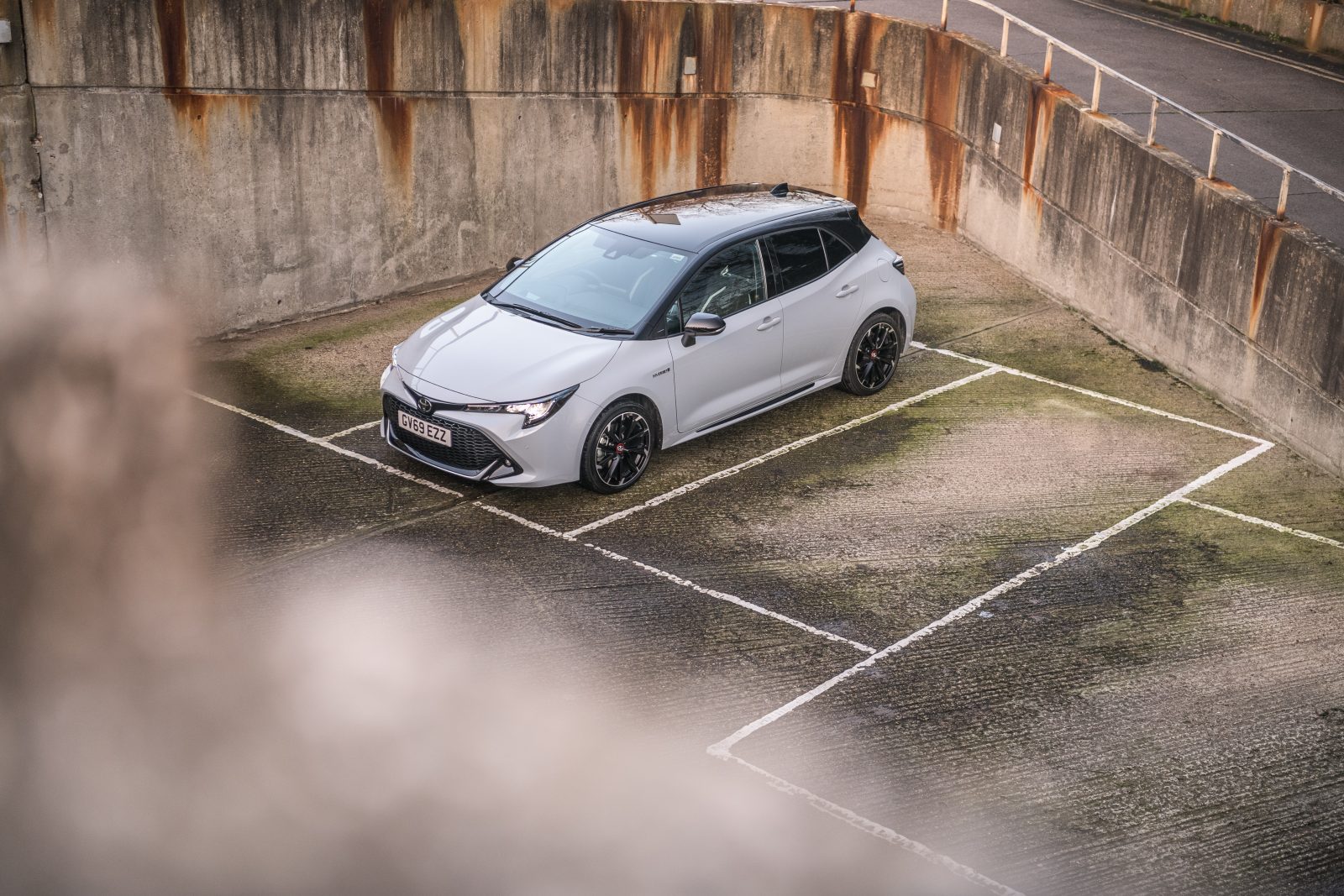
Some owners of Toyota hybrids might be wondering what will happen to their car during long periods without use, particularly when it comes to the level of charge in the batteries.
The reassuring news is that no difficult car maintenance is necessary. However, there are some tips that, if followed, can help ensure your Toyota remains in tip-top condition during an extended layoff.
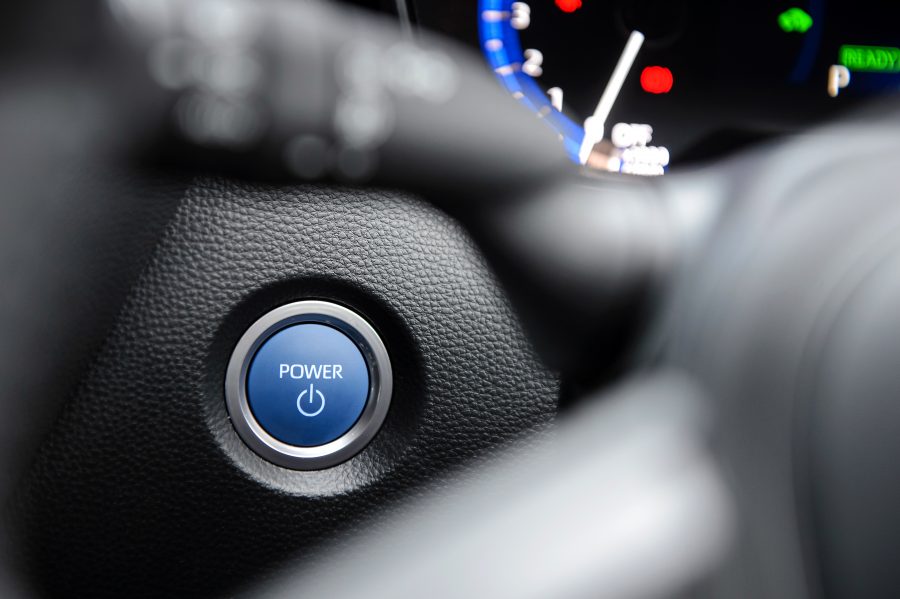
To recap, Toyota hybrids generally contain two batteries: a 12-volt battery (which powers systems such as the headlamps and audio) and a high-voltage hybrid system battery (which supplies the power to start the combustion engine and drive the electric motors).
The simplest way to maintain charge in both of these batteries is to simply go through the normal start procedure: press the ‘Start’ button with your foot on the brake and ensure the ‘Ready’ light is illuminated on the dashboard (you don’t have to keep your foot on the brake thereafter, but ensure your vehicle’s transmission is in ‘Park’ and the parking brake is engaged).
We recommend you put the car in ‘Ready’ mode for about 60 minutes before switching it off again, drive for at least 30 minutes and repeat the process at least once a week. Please do not leave your car unattended when it is in ‘Ready’ mode.
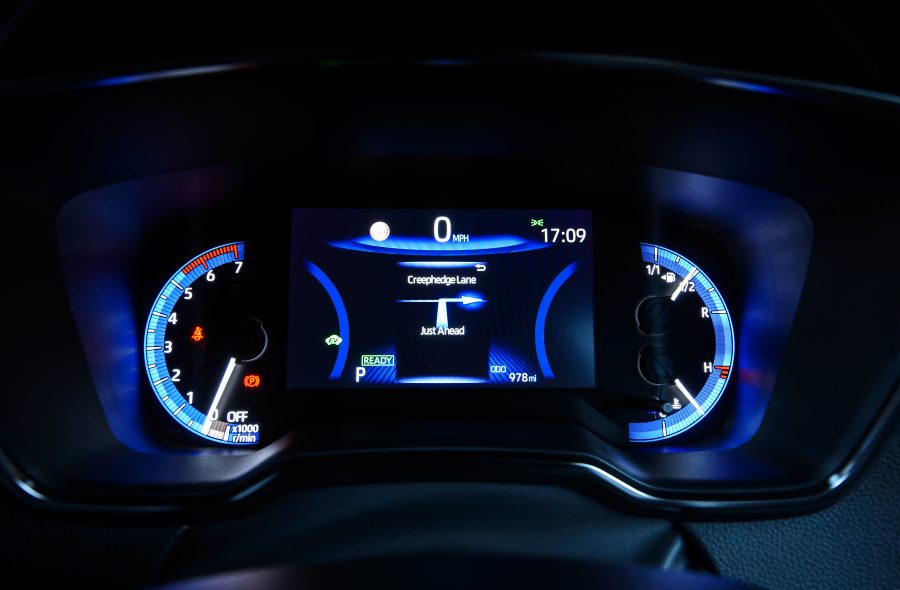
During the time that that car is in ‘Ready’ mode, you may hear and feel the internal combustion engine kick in; this is a normal part of the self-charging process. You might be tempted to switch on the radio to pass the time, or turn on other systems, but bear in mind these will consume small amounts of electrical power so it is preferable to leave them off.
Ensure the handbrake is on; there’s no need to go for a drive, although we must stress that this procedure should take place in a well-ventilated area – something to consider if you park your vehicle in a garage.
What if my Toyota isn’t a hybrid?
Our petrol and diesel cars only have a 12-volt battery, which provides the power to start the engine in addition to the other systems mentioned above. Regular start-up of the vehicle on conventional petrol and diesel engines needs approximately 20 minutes of running to put back into the battery what you remove on start up, so to maintain this battery we would suggest 60 minutes of running at least once a week.
Is there anything else I need to do?
Whether you own a hybrid or a Toyota equipped solely with an internal combustion engine, there are a few other easy car maintenance points that can ensure your Toyota hybrid remains healthy and happy during an enforced hibernation. Again, please adhere to the latest government advice regarding social distancing.
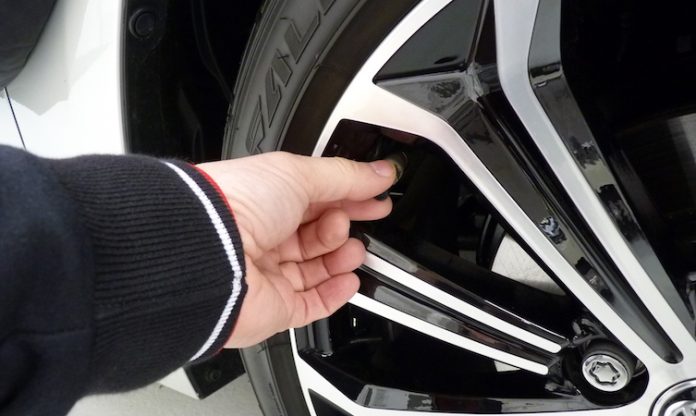
- Check the tyre pressures are fully inflated to the recommended level and top-up if necessary. It can be a good idea to repeat this process when you first drive your car after a long period of inactivity.
- Clean the car thoroughly inside and out. If you are storing your car in a garage, make sure the vehicle is completely dry before you put it away.
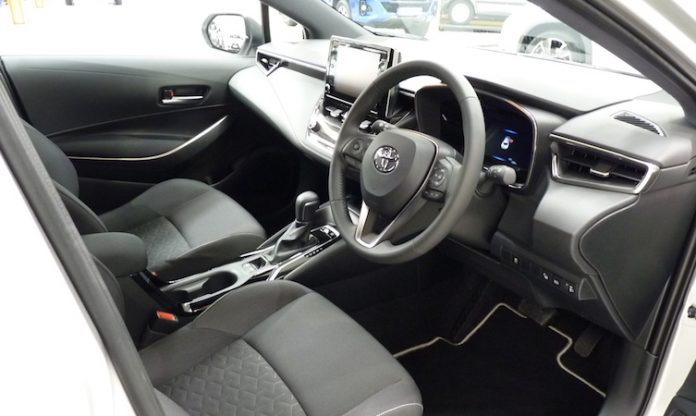
- If you do plan to store your car in a garage, ensure the chosen storage area offers plenty of ventilation. If the space is secure, you could consider opening one of the car’s windows a small way to ventilate the interior. If you do this, you might have to change your car alarm’s setting to prevent it setting off the intrusion sensor – please consult your car’s manual for more information.
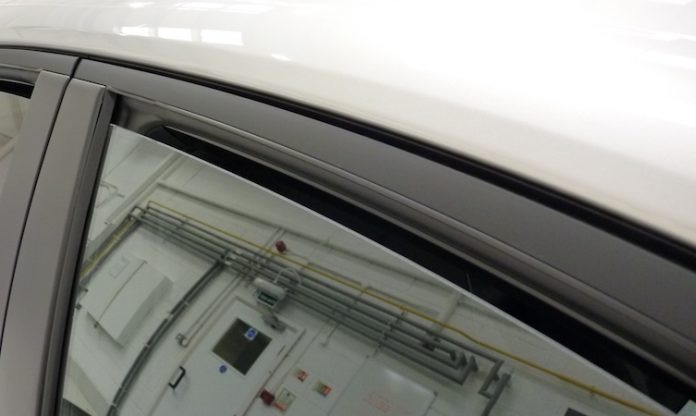
- It can be beneficial to leave the vehicle with the parking brake disengaged to prevent the brakes from binding, but only do this if you are certain the car is on level terrain and isn’t going to move. Ensure the transmission is set to ‘P’ for park and place wedges or chocks, if you have them, under the wheels.
- If you have a 12V battery trickle charger, or a solar panel charger, and are confident using them, then these are a good option to keep the battery fully charged while the vehicle is stationary for a period of time.
- If your vehicle is equipped with smart entry and start but the system isn’t operated for a long time, a battery-saving function will automatically be activated to prevent the electronic key battery and the 12-volt battery from being discharged. Battery depletion in the key is minimised by stopping the electronic key from receiving radio waves. On many models equipped with this system, it is possible to manually put the key into battery-saving mode, so please consult your car’s handbook for more information. If you aren’t planning to drive your car for a long time, consider putting the smart key in a safe place and not carrying it around with you in your pocket. This will prevent the car from ‘waking up’ unnecessarily should you happen to walk near it in your garage or driveway.
- If the vehicle will be kept on private property (such as inside a garage) for the duration of its storage, you could consider applying for a Statutory Off Road Notification (SORN). This informs the DVLA that the car is off the road and you will receive a refund of any remaining full months of tax. However, you won’t be able to drive your car legally until you tax it again, so it is only advisable if you are positive you won’t use your car for a long time. You can read more information about how to SORN your car here.
Read more Toyota GB’s latest statement on the Coronavirus (Covid-19) situation



Another person with the 12v battery issue. Owned the car since July 2024 with no problems. Just come back from Scotland so did 1,770 in 2 weeks. Then shortly afterwards I got the dreaded message to tell me about the battery charge running low. Average weekly mileage is 189 miles. Dealer gave me the standard piece of paper about getting a trickle charger etc and told me that by upgrading to a 45ah battery will not help. Also advise me, do not get close to the car as this will drain the battery although I do not have keyless entry so am rather surprised this would happen.
As Toyota changed the battery around Oct 2025 surely this shows that Toyota know there is a problem. Do you get as many complaints from owners of post Oct25 vehicles as you do from pre Oct25 vehicle’s?
Yes I have read your https://mag.toyota.co.uk/12v-battery-care/ article.
It looks like this will be the last Toyota I will be getting. Its a shame that it was not mentioned when buying it.
Further to my post of May 7th, with the 12v battery going dead after a long journey, I have done as you suggested and taken my car to my local Toyota dealer. Despite presenting them with documentary evidence of the issues I am having, they claim there is nothing wrong with the car, and it must be something to do with the way I’m driving it…..
If I didn’t have to keep using a boost starter, and a battery charger, I wouldn’t be able to drive it all.
They now want to charge me £210 to have the car in for 2 days to ‘run some diagnostic checks’ – this on a car less than a year old. My next appointment after that will be with the local Kia dealer, as their cars can start from the hybrid battery if the 12v battery is dead – a simple solution to a widespread problem.
Good afternoon Tony,
We’re sorry to hear you remain dissatisfied following your visit to your local Toyota Centre.
All modern cars drain the 12v battery when they are switched off. This is due to the onboard electrical systems. If the 12v battery is not given a chance to recharge often enough, it can go flat. Read more here and pick up some tips that, if followed, can help ensure your Toyota remains in tip-top condition: https://mag.toyota.co.uk/12v-battery-care/
Thank you.
Thanks, but you’re missing the point here – my battery is going dead despite frequent long journeys, and overnight after a full charge!
Hi Tony,
If you are still concerned, please visit your local Toyota centre: https://www.toyota.co.uk/
They should be able to assist you.
Thank you.
Tony, I’ve a similar problem to you. You mention a boost starter but every one I’ve seen has very small cables, far too small to attach to my Corolla’s charging points which are over 1m apart. Have you managed to find one or is there a work around?
Morning Alan,
Your local Toyota Centre are on hand to assist you with this.
Thank you.
Toyota used to be known for reliability but that can’t be said of their hybrids. When their answer is to use a trickle charger then there seems to be a problem. When people are disengaged the negative terminal of the battery before going on holiday then there seems to be a problem.
When loyal customers, like myself for over 20 years will no longer buy Toyota there seems to be the problem.
Don’t blame the customer for their driving jabits. Blame the underpowered 12v battery or the technology which means that the 13v battery is needed to allow the other batter to start the car.
I am concerned that if I leave my 2024 CHR petrol hybrid unused in the drive for 2-3 weeks it will likely lead to a dead battery. Throughout these pages are references / suggestions from Toyota UK that owners can use (amongst various measures) some kind of battery maintenance support to mitigate such problems. Such support could include trickle chargers, am I right? And yet, when I called my local dealer (Jemca) and spoke to the service department today, they were adament that use of such a charger will negate my warranty if plugged into the car. Who is right?
Hi Jeff,
Thank you for your question.
We recommend, where possible, aim to take your car on a 30-minute journey at least once a week. The speed isn’t as important as the duration of the journey. If this is not possible or you plan not to use the car for a prolonged period, use a quality battery maintainer (also called a trickle charger) to keep the charge level topped up. Toyota Centre staff will be able to advise on whether a mains- or solar-powered option is the best for your circumstances. The use of a trickle charger does not negate your warranty.
If you have any concerns, please don’t hesitate speaking to your local Toyota Centre again.
Thank you.
Much appreciated. I’ll print your response and have it ready to the dealer if necessary. Regards.
Hi,
If I go on a 2 hour drive before going away tomorrow, how long should my battery last on a Toyota yaris cross as I am worried I am going to be coming back to a dead battery after time away.
Thanks
Morning Alicia,
Apologies for the delay in coming back to you. We hope your Yaris Cross Hybrid started with no problems after your trip away.
Read more here and pick up some tips that, if followed, can help ensure your Toyota remains in tip-top condition: https://mag.toyota.co.uk/12v-battery-care/
Thank you.
I too have the same problem with my 2023 Toyota Yaris Hybrid and that I am told via emails from Toyota to take my car on a long run each week as the 12v battery is low on charge. I only use the car on short runs 2 to 3 times each week. I have always had Toyota cars for the last 15 years and aways been very pleased with the reliability, until now!
I contacted the main dealership from where I purchased the car and they were of little help and I pointed out to them this issue was never discussed with me when I purchased the vehicle.
I now have little confidence in the car’s reliability; perhaps this problem being highlighted on BBC’s Morning Live programme will kick Toyoto to come up with a fix.
Good morning John,
We are sorry to hear you are experiencing issues with your Toyota Yaris, we would recommend having a read of our latest article which will give you some helpful tips on how to look after your vehicles battery.
https://mag.toyota.co.uk/12v-battery-care/
Thank you.