

Key takeaways
- A hybrid vehicle uses two or more power sources – typically a petrol engine and an electric motor.
- A vehicle equipped with a petrol/electric powertrain might also be referred to a hybrid electric vehicle or by the abbreviation HEV.
- Toyota’s ‘full hybrid’ system can run on electric-only power in certain conditions, such as slow-moving traffic.
- The hybrid battery is charged by the petrol engine (via a generator) and by regenerative braking (recovering energy when you slow down).
- A Toyota hybrid doesn’t need to be plugged in to recharge, but plug‑in hybrids (PHEVs) are available for drivers who want a longer electric-only range.
What is a hybrid vehicle?
In simple terms, a hybrid is a vehicle with two or more power sources. Most hybrids pair a conventional internal combustion engine with an electric motor, but different hybrids combine those power sources in different ways.
Since 1997, drivers have enjoyed better fuel economy, lower running costs and unrivalled levels of comfort and refinement thanks to Toyota’s hybrid technology. Today, Toyota’s range of hybrid cars encompasses small hybrids like the Toyota Yaris Hybrid, family size cars like the Corolla and Toyota C-HR, even estates like the Corolla Hybrid Touring Sports. But have you ever wondered how hybrid cars work?
Read on to discover exactly what Toyota’s hybrid drive system is, how it works and the benefits it can offer.
What are the different types of hybrid?
Beginning with the original Prius, Toyota pioneered the full hybrid system that uses two separate powerplants – a battery-powered electric motor and petrol-driven combustion engine – which can work together to drive the vehicle or can each be used in isolation.
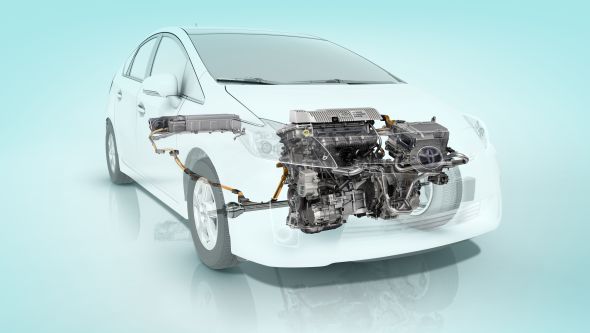
The second kind of hybrid is known as parallel. It uses a normal combustion engine as the main source of power, with an electric motor fitted between the engine and gearbox to provide assistance. This arrangement tends to be more restricted in its function than a full hybrid, and fitting an electric motor into a very small space also limits its power and EV (electric vehicle) range.
Lastly, the third hybrid variation is the series type. In this type of vehicle the electric motor provides all the drive. The normal combustion engine isn’t connected to the transmission, and instead works as a generator to power the electric motor. The main hurdle for a series hybrid is maintaining its efficiency once the battery power has been used up. For this reason, series hybrids are rare.
Toyota hybrid – how does the system work?
Toyota’s hybrid drive system consists of six primary components: petrol engine, electric motor, electric generator, power control unit, and a power split device that uses a special type of gearbox to smoothly distribute power from the engine, motor and generator.
It is a clever, fuel-saving technology that can seamlessly and automatically switch between electric power and conventional engine power. Capable of adapting to different driving conditions, our hybrid system intelligently controls the power coming from both sources and tells the car how to combine them for the greatest efficiency and performance.
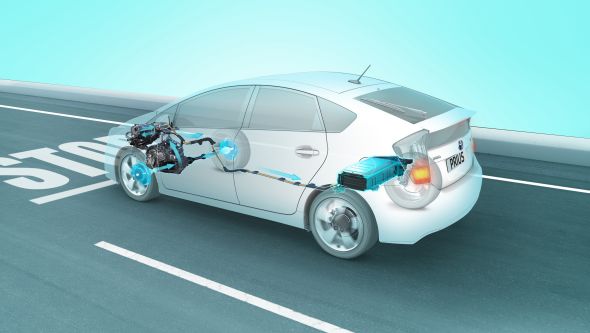
The system delivers true synergy between the two power sources. When the engine is running, it charges the battery via the generator; when driving conditions allow it, such as in slow-moving traffic, the generator can cut out the petrol engine and let the electric motor take over for zero-emissions travelling. The sophisticated engine management system can sense when the car is stopped and will switch off the engine to conserve power and cut emissions, automatically starting up again when needed.
The battery is kept well charged by the system, so a hybrid-powered Toyota won’t need to be plugged into a mains supply to be recharged.
However, Toyota does produce plug-in hybrid electric vehicles for people who can make use of its greater range of more than 30 miles in electric-only EV mode and cars which convert hydrogen into electricity.
Read more about the different types of hybrid and electrified vehicle by clicking here.
How are the batteries charged?
Toyota’s hybrid system charges the battery in two ways. Firstly and as already mentioned, the petrol engine drives the generator to charge the battery. The second method is through regenerative braking, a system that puts braking energy to good use.
Every time you put your foot on the brake or lift off the accelerator, the system diverts energy back to the battery where it is, in effect, recycled. Instead of the energy being lost as heat or noise from the brakes, it is captured and then used to power the electric motor later. This is particularly efficient in stop-start traffic where the system recovers and stores a great deal of energy, making the car more efficient overall.
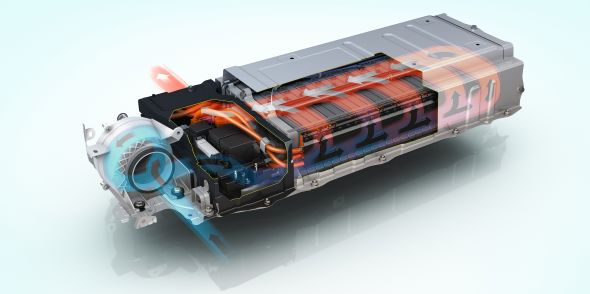
For a PHEV like the Prius Plug-in, the on-board battery can also be charged at home using the mains supply or at dedicated charging points along your journey, allowing the greater EV range of up to 30 miles.
How long do hybrid batteries last?
The batteries in Toyota’s hybrid vehicles are efficient, corrosion-resistant units designed to last, which is why Toyota’s standard battery warranty is five years or 100,000 miles and can be extended up to 15 years with no limit on total mileage – read more about this here.
The batteries are substantial units that have to store sufficient voltage to power the car with no assistance from the petrol engine. It’s true that their production does have a small, additional environmental impact, but this is more than offset by the environmental benefits of driving a hybrid car.
Toyota is also keen to recycle the batteries from its hybrid cars, which can be remanufactured to make new batteries or repurposed into other forms of stationary energy storage – this can be arranged through your Toyota dealer. We already recover more than 90% of hybrid batteries from our vehicles, and are targeting a 100% recovery rate.
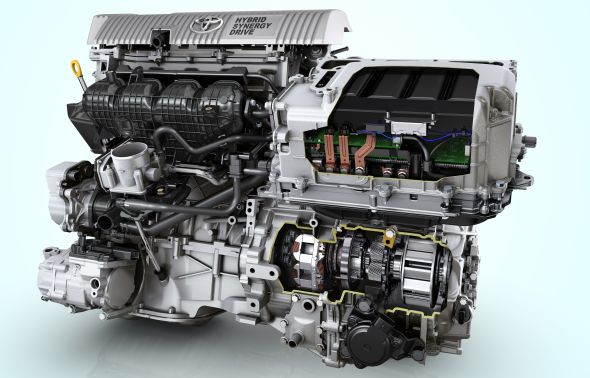
Is the engine different to that of a normal car?
In short, yes. The internal combustion engine used in a Toyota hybrid uses a slightly different engine cycle than the conventional Otto-type four-stroke cycle. Called the Atkinson cycle, this modified four-stroke cycle produces less heat and is therefore more efficient.
By cooling the internal combustion chamber using recirculated exhaust gases, it avoids a problem faced by engines with traditional cycles: injecting more fuel than necessary to reduce combustion temperatures and prevent the catalytic converters from overheating. The traditional remedy works, but uses more fuel in the process.
A more in-depth analysis of Toyota’s use of the Atkinson cycle can be read here.
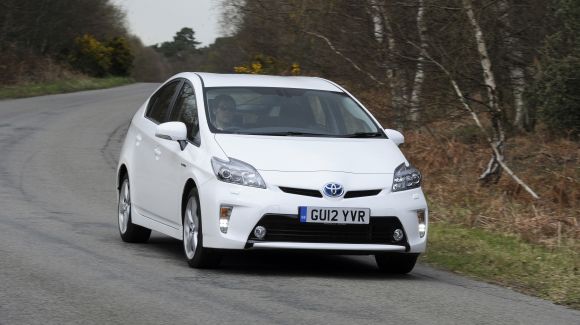
Do I have to drive a hybrid differently?
Not at all. Because Toyota has made the hybrid system fully automatic, it will optimise its operation and minimise fuel use for each driver. You can sit back and enjoy the drive!
You can read more about the experience of driving a Toyota hybrid by reading this article, in which Tim Dickson, a motoring journalist and efficient driving expert, takes a Corolla Hybrid for a spin.
There are also some general tips, many of which apply to maximising the fuel economy of hybrid and non-hybrid cars alike, at this link.
Frequently asked questions (FAQs)
Do I need to plug in a Toyota hybrid?
No — the battery is kept charged by the system while driving, so it doesn’t need to be plugged in. (Plug‑in hybrids are an option if you want longer electric-only running.)
Can a Toyota hybrid run on electric power alone?
Yes, when conditions allow (for example in slow-moving traffic), the petrol engine can cut out and the electric motor can take over for zero‑emissions travelling.
Where does the battery get its charge from?
Two main sources: the petrol engine (via a generator) and regenerative braking when you slow down or brake.
What’s the difference between a hybrid and a plug‑in hybrid?
The plug‑in hybrid’s battery can be charged from the mains, allowing more electric-only range.
To find out more about our complete range of hybrid vehicles, click here.
I have a Toyota Yaris hybrid 2019 version. Recently I have noticed that when the battery starts to self charge there is a strong smell of petrol coming from the AC and where the heating system is. I have to keep them closed but sometimes the smell still comes inside the car. Is this something to do with the battery itself?
Hi Dorothy,
We’re sorry to hear that, we’d recommend getting in touch with your local Toyota Centre to arrange an inspection.
Thanks.
I am interested in knowing more about Toyota Prius hybrid car
Hi Gbenga,
Thanks for your comments and your interest in the Prius Hybrid.
If you follow below link you can find out more information on this exciting model. If you would like us to arrange a test drive for you please let us know on here and we’d be happy to arrange.
https://brnw.ch/21wStzU
Many thanks,
Toyota GB
To be honest I’m a little confused, I have a 2019 Carolla Hybrid that has averaged 71.5 over 1014 journeys since April 2024. Yet a lot of the comments posted state around 55mpg. With an average speed of 26.3mph, which compares very nicely to uk average of 23mph, it’s not that I’m driving slowly. So I’m faster and more economic than most, win, win. By far the best car I have ever owned.
Have there been problems with battery powered fires in the newer hybrid vehicles. My wife is worried about fires happening after you park your vehicle in the garage at night.
Hi Mark,
Thank you for your question. All of our Toyota cars have to meet very exacting safety specifications. Over the last few decades, our hybrid cars have been thoroughly road tested, crash tested and safety tested. They have racked up millions of miles of driving over all sorts of demanding environments.
If you ever want to discuss your concerns further in detail our Toyota centres would be happy to assist.
Many thanks,
Toyota UK
I recently bought my car and I couldn’t be happier! The colour is absolutely perfect exactly what I was looking for. Amy was amazing throughout the whole process so helpful, patient, and friendly. She made everything so easy and stress free. I’d definitely recommend buying from here!
Hi Judith,
Thanks for your comment. It’s great to feedback from one of our many satisfied customers.
Many thanks.
Toyota UK
I get conflicting stories about how the 12 volt battery in my toyota hybrid is charged. Does the 12 v battery charge when the car is parked but in ready mode?
Hi James,
Thank you for your query. The car’s combustion engine will kick in periodically to charge the 12v battery.
However, if you would like to find out more about your battery health please consult your local Toyota centre for a technical inspection.
Find your local Toyota centre here: https://brnw.ch/21wVoqQ
Many thanks,
Toyota UK
Can you explain why on occasions our 2022 Yaris whilst showing 80% battery charge, immediately starts the engine whilst on other occasions from exactly the same situation with a lower charge it sets off under EV power and dies so for some considerable distance.
Hi Cliff,
Thank you for your honest feedback. We take the voice of our customers very seriously.
We would recommend consulting your local Toyota dealer, who should be on hand to assist you with a battery check: https://www.toyota.co.uk/
If you have any further questions, please do not hesitate to ask.
Many thanks,
Toyota UK
Hi there 👋
Actually I must say congratulations to Toyota for their good innovative mindset and been able to understand appropriate needs for the society and they deliver very appropriately
I for one I like everything about Toyota and I’m an Automobile mechanic based on Toyota cars
But I actually want to study the new innovated version (Atkinson cycle) added to the traditional Otto four stroke cycle and be a specialist in it
Thank you Team Toyota
Hi Tifuh,
Thank you very much for your support! It is greatly appreciated.
For more information on all-things Hybrid, please visit our website: https://www.toyota.co.uk/hybrid
Thank you.