

Some owners of Toyota hybrids might be wondering what will happen to their car during long periods without use, particularly when it comes to the level of charge in the batteries.
The reassuring news is that no difficult car maintenance is necessary. However, there are some tips that, if followed, can help ensure your Toyota remains in tip-top condition during an extended layoff.
To recap, Toyota hybrids generally contain two batteries: a 12-volt battery (which powers systems such as the headlamps and audio) and a high-voltage hybrid system battery (which supplies the power to start the combustion engine and drive the electric motors).
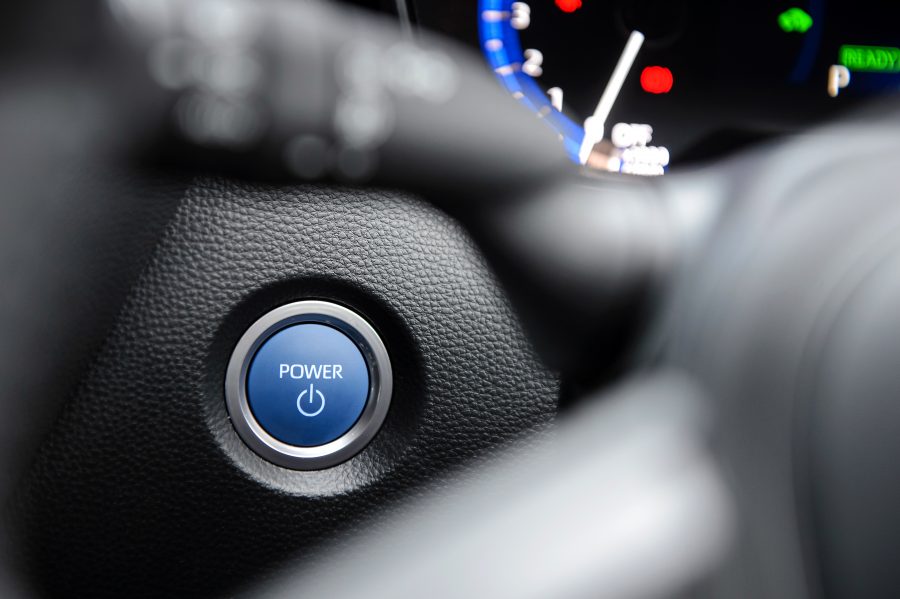
The simplest way to maintain charge in both of these batteries is to simply go through the normal start procedure: press the ‘Start’ button with your foot on the brake and ensure the ‘Ready’ light is illuminated on the dashboard (you don’t have to keep your foot on the brake thereafter, but ensure your vehicle’s transmission is in ‘Park’ and the parking brake is engaged).
We recommend you put the car in ‘Ready’ mode for about 60 minutes before switching it off again, drive for at least 30 minutes and repeat the process at least once a week. Please do not leave your car unattended when it is in ‘Ready’ mode.
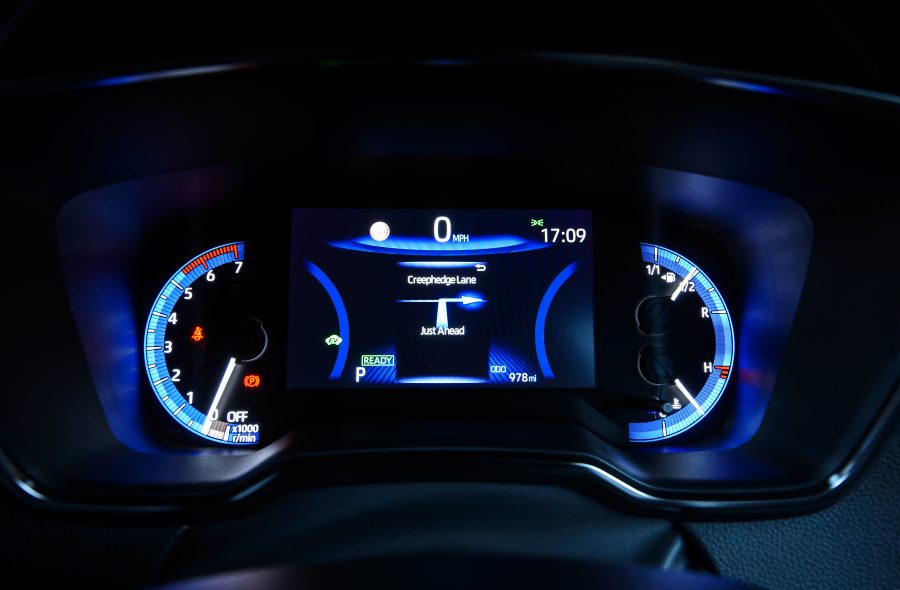
During the time that that car is in ‘Ready’ mode, you may hear and feel the internal combustion engine kick in; this is a normal part of the self-charging process. You might be tempted to switch on the radio to pass the time, or turn on other systems, but bear in mind these will consume small amounts of electrical power so it is preferable to leave them off.
Ensure the handbrake is on; there’s no need to go for a drive, although we must stress that this procedure should take place in a well-ventilated area – something to consider if you park your vehicle in a garage.
What if my Toyota isn’t a hybrid?
Our petrol and diesel cars only have a 12-volt battery, which provides the power to start the engine in addition to the other systems mentioned above. Regular start-up of the vehicle on conventional petrol and diesel engines needs approximately 20 minutes of running to put back into the battery what you remove on start up, so to maintain this battery we would suggest 60 minutes of running at least once a week.
Is there anything else I need to do?
Whether you own a hybrid or a Toyota equipped solely with an internal combustion engine, there are a few other easy car maintenance points that can ensure your Toyota hybrid remains healthy and happy during an enforced hibernation. Again, please adhere to the latest government advice regarding social distancing.
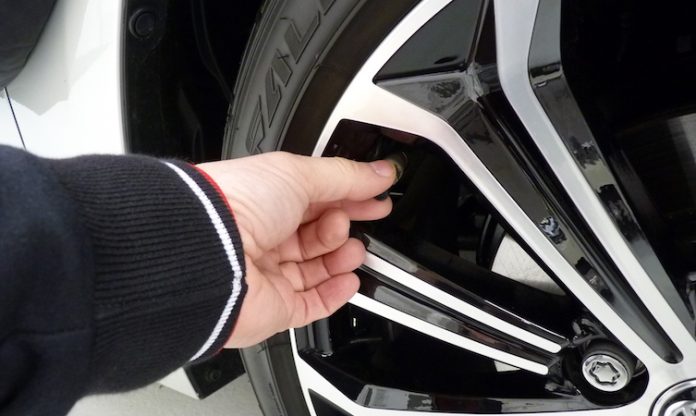
- Check the tyre pressures are fully inflated to the recommended level and top-up if necessary. It can be a good idea to repeat this process when you first drive your car after a long period of inactivity.
- Clean the car thoroughly inside and out. If you are storing your car in a garage, make sure the vehicle is completely dry before you put it away.
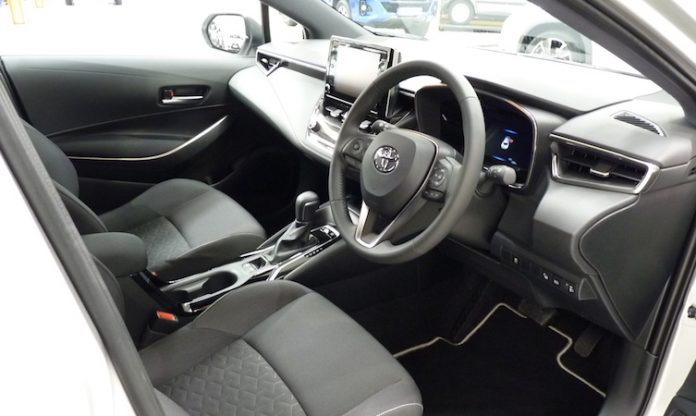
- If you do plan to store your car in a garage, ensure the chosen storage area offers plenty of ventilation. If the space is secure, you could consider opening one of the car’s windows a small way to ventilate the interior. If you do this, you might have to change your car alarm’s setting to prevent it setting off the intrusion sensor – please consult your car’s manual for more information.
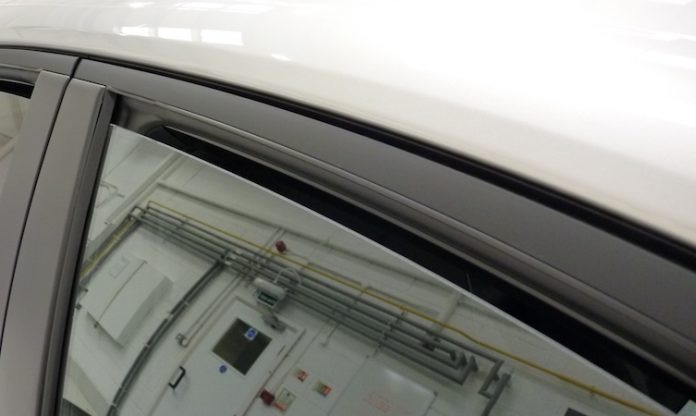
- It can be beneficial to leave the vehicle with the parking brake disengaged to prevent the brakes from binding, but only do this if you are certain the car is on level terrain and isn’t going to move. Ensure the transmission is set to ‘P’ for park and place wedges or chocks, if you have them, under the wheels.
- If you have a 12V battery trickle charger, or a solar panel charger, and are confident using them, then these are a good option to keep the battery fully charged while the vehicle is stationary for a period of time.
- If your vehicle is equipped with smart entry and start but the system isn’t operated for a long time, a battery-saving function will automatically be activated to prevent the electronic key battery and the 12-volt battery from being discharged. Battery depletion in the key is minimised by stopping the electronic key from receiving radio waves. On many models equipped with this system, it is possible to manually put the key into battery-saving mode, so please consult your car’s handbook for more information. If you aren’t planning to drive your car for a long time, consider putting the smart key in a safe place and not carrying it around with you in your pocket. This will prevent the car from ‘waking up’ unnecessarily should you happen to walk near it in your garage or driveway.
- If the vehicle will be kept on private property (such as inside a garage) for the duration of its storage, you could consider applying for a Statutory Off Road Notification (SORN). This informs the DVLA that the car is off the road and you will receive a refund of any remaining full months of tax. However, you won’t be able to drive your car legally until you tax it again, so it is only advisable if you are positive you won’t use your car for a long time. You can read more information about how to SORN your car here.
Read more Toyota GB’s latest statement on the Coronavirus (Covid-19) situation



I bought my new CHR in 2024 (long after the imposed lockdowns had ceased) – so lockdown not even in the equation.
Had no issues with car until app on phone updated and started giving low 12v battery indications.
Even though I do plenty of mileage and the car is used every day (17000miles in 18 months) I have now had the AA out on two occasions before Christmas and over New Year to start my car with 12v battery dead.
Toyota dealer told me it was my driving that was at fault (this is my 9th hybrid from Toyota! And I’ve even been used on blind interviews by Toyota on hybrid technology) . The suggestion was to put car in ‘sport mode and drive for 30 minutes like Schumacher!)
Dealer denies that there is a fault (and I am the only one experiencing or reporting it) so no joy in getting anyone to listen.
Just found this thread and thought I would drop in my two pennies of thought.
Battery is undersized and suffers from low capacity. Testing of charge system shows inverter working and charge going to battery when system on —- so no issue with circuit or the way in which the system is designed to work.
Therefore – problem lies with battery and capacity. A problem Toyota are aware of but still remain in denial.
Just change the batteries for better ones and save us all this hassle and bad feeling.
I was once 100% spokesman and advocate for Toyota reliability, but this (and other badly thought through problems with PKSB not recognising tow bars – oh that’s a fun one!) make me wonder how Toyota can justify their pricing versus competition?
Good morning Andy, apologies for the delay in coming back to you.
We’re sorry to hear you’re experiencing problems with the battery in your Toyota C-HR.
All modern cars drain the 12v battery when they are switched off. This is due to the onboard electrical systems. If the 12v battery is not given a chance to recharge often enough, it can go flat. This article outlines some tips that, if followed, can help ensure your Toyota remains in tip-top condition.
If you would like your car to be inspected again, please get in touch with your local Toyota Centre.
Thank you.
Have Toyota updated the capacity on the Yaris 2026 model?
Hi Nuran,
Thank you for your question.
From October 2025, vehicles will have a 45Ah (larger dimension) 12v battery installed by Mutlu.
Many thanks,
Toyota UK
@Andy Jackson my partner has the 2021 Yaris Excel, as of Monday (2.2.26) I have the Yaris Cross Excel. I am retired from the tools (City and Guilds Vehicle Technician Level 3 and A1/A2 Assessor) and have fitted my own cameras (622GW). If you have the dual Nextbase 380GW/X, then that model needs the battery pack from NextBase (see https://nextbase.co.uk/accessories/nextbase-380gw-battery-pack/). The dealers do not tell you this, as this is, in effect, an ‘aftermarket product’. Seemingly, dealers now remove this and the 385GW/X model from a second-hand vehicle when reselling it to the next customer, unless you wish to purchase it as an accessory; the same goes for the carpet mats – I know, I had to pay for a protection pack as there were no mats being supplied. Also make sure you check you have the latest software installed, as that too can alter camera performance – that is beyond Toyota.
As for the vehicle battery, as of 31.01.26, I was informed by a dealership that the hybrids have had a battery upgrade in recognition of the issue. So, I would contact your dealership and ask if you are eligible for any upgrade. If not, then I would look at getting a replacement by a manufacturer I would recommend – Yuasa. Go directly to their website and look at their prices in comparison with Halfords; with some batteries, Halfords will give you up to a 4-year warranty (model variant dependant). Your dealer will only give you 12 months – even if you have the annual warranty through the servicing agreement in place (10 years or 100,000 miles).
Now, here’s advice from firsthand experience. Given my partner and I went on holiday for over a week, when she came to start her car (Yaris Hybrid), it was as dead as a doornail. Working in a hospital and as a responder myself, this was not expected. So I immediately invested in a NOCO 45X booster pack with a fly lead directly connected with the battery (+V) and chassis bolt (-V). Then simply carry the battery booster pack in the boot or under the passenger seat. That way you can boost if needed at any time by simply plugging it in. You can recharge it using any USB-C plug following NOCO guidance.
In the Yaris Cross (because I have learnt of this issue with my partner’s Yaris) and from my previous model, the Verso, with being an emergency medical responder, I will set up a Bluetooth remote power inverter system that will trickle charge during any downtime, and as I possess Yuasa proper testing equipment, I can monitor my battery status and keep the printouts for reference. If required, I will upgrade the battery to supersede that which is fitted so reliability will not become an issue for me – but, yes, you are right. This is something that Toyota should have taken and immediately rectified; instead, it is working on complaint capacity, which is negligible against that of a major worldwide recall! I had a similar issue with a far bigger battery (YBX5115 12V 90Ah 800A Yuasa Silver High Performance Battery) compared to 43Ah (see https://media.toyota.co.uk/wp-content/uploads/sites/5/pdf/240704-Yaris-Cross-Tech-Specs.pdf) for the auxiliary battery, which runs all onboard electrical functions and is found under the rear offside passenger seat.
Just returned from 2 weeks holiday and found small battery in my toyota corolla was flat and car would not start.
This is a serious design fault. Advice includes trickle charge BUT its not possible when you leave car at an airport !!!
This created a huge problem for me! Yes RAC came but had to wait several hours. What’s the answer (other than don’t buy another Toyota!!)
Hi Barry,
Thank you for your comments. We absolutely understand your frustration.
To provide some detailed guidance:
Recommendations for maintaining 12V battery health:
1) Frequent use: Where possible, aim to take your car on a 30-minute journey at least once a week. If this is not possible or you plan not to use the car for a prolonged period, use a quality battery maintainer (also called a trickle charger) to keep the charge level topped up. Toyota Centre staff will be able to advise on whether a mains- or solar-powered option is the best for your circumstances.
2) Combine trips: Constant short trips will get your battery down, so try reducing their frequency by combining errands. And if these journeys require a couple of short stops, don’t worry too much. Less battery energy is required to start an already warm engine; and similarly, less energy is required to maintain the climate of an already warm cabin.
3) Avoid wasting energy: Remember that if the powertrain is not active it is not charging the battery. In that case, electrical accessories such as lights, ventilation and the audio system will all nibble away at the level of charge. So make it a habit to switch off these accessories before turning off the engine. Not only will this preserve the charge but it will stop the battery having to power the systems back up at the same time as starting the powertrain.
4) Check the battery’s condition: Regularly inspect your battery for corrosion around the terminals and ensure the cables attached to them are tight and clean. Your local Toyota Centre will check these connections as part of your car’s regular service programme, but will also be happy to offer advice outside of this schedule.
Please bare in mind that the difficulties you have experienced are not unique to Toyota, but are a consequence of increasing electrical systems such as heated seats, within hybrid vehicles.
If you are still concerned, please visit your local Toyota dealer, who should be more than happy to assist you by inspecting your battery health.
Please do not hesitate to ask if you have any further questions.
Many thanks,
Toyota UK
Just a thought….. do the cars with issues have factory or dealer fitted dashcams (they are often pushed at point of sale)?
If so are they wired into a permanent live fuse (which will run off the 12v battery) ?
Just asking, as it might provide some answers
This is a good point to raise Andy, thanks.
It is recommended to not leave any accessories plugged into power points if this is live when vehicle is switched off, this includes dash cams and phone chargers etc. We’d recommend a visit to your local Toyota Centre for advice relating to your car.
Thank you.
I have aToyota Yaris Cross 2023 model, when I took it in for its first service on 01/10/2024 I was provided electronic documents for the service, upon examining the Toyota Hybrid Service sheet it stated that it had passed but further down on this sheet it stated that the auxiliary batter had failed, No one at the dealership told me this and subsequently the vehicle broke down at home around 10/02/2025, the dealer said they could not look at it for two weeks and I would have to get it recovered back to them, after a week I called the RAC to look at the vehicle and they informed me that the 12v battery was dead and they would jump start it and I would have to take it to the dealer right away as the would not come out again to start it without an £80 charge.
I called the dealership and explained the situation and they said that they had no room and I could only bring it on my day it was booked in, I pleaded with booking agent saying I had bought it from them and had a 4 year service plan with them and I would greatly appreciate if I could be allowed to bring it inane I was happy that it would remain there till my booking date, reluctantly I was put through to someone at the Dealership and had to go through all the details again before they reluctantly agreed for me to bring it in.
Upon arriving at the Garage the first thing I was asked was ” who said you could bring it in”
I left the vehicle there and the battery was replaced FOC and I picked it up on 21/02/2025.
When I took it in for a service on 01/10/25 I checked the Hybrid service sheet and I saw that it no longer mentioned the auxiliary battery on this sheet.
On the 05/01/2026 the Toyota app informed me that the auxiliary batter had low voltage and I should get the car look at Immediately, the first booking I could get was 26/01/2026.
I have to say that I bought this car as Toyota vehicles had good reputation for reliability which is now questionable.
I did recommend my `daughter to buy a Toyota but sadly I regret that now.
Regards Paul
Morning Paul, apologies for the delay in coming back to you.
We’re sorry to hear you’re experiencing problems with the battery in your Yaris Cross Hybrid. All modern cars drain the 12v battery when they are switched off. This is due to the onboard electrical systems. If the 12v battery is not given a chance to recharge often enough, it can go flat.
We hope things were resolved on your recent visit but if you remain unhappy, we’d recommend raising your concerns further with the Toyota Centre.
Thank you.
Hi. Do you know which month in 2026 you will be releasing the specification and prices of the new 2026 RAV4 plug-in vehicles ? I’m following your website but no detailed info yet. Thanks.
Hi Mike,
Thank you for your question.
We have no information to share as yet, however, please remain up-to-date through our website: https://www.toyota.co.uk/ and magazine: https://mag.toyota.co.uk/
If you have any further questions, please do not hesitate to ask.
Many thanks,
Toyota UK
This thread has me very concerned. At the beginning of January I ordered a new Corolla hybrid and the dealer is expecting delivery in February. However, I have gone for a PCP deal with only 6000 miles per year as I use the car somewhat infrequently – maybe twice a week for a total of 20 miles some weeks. I don’t mind using a solar charger for extended periods of no use, but I don’t want to have to be plugging in a charger after every trip. I also don’t want to sit in the car for an hour a week using fuel to charge the battery.
It sounds as if I might be best of cancelling this purchase and switching to a conventional petrol engine?!
Good morning Tim.
Congratulations and thank you for choosing Toyota!
To discuss your concerns in more detail, we’d recommend raising these with your local Toyota Centre.
Thank you.
Do not buy a hybrid i have to be jump started every week and now they say to me I need to drive the car for an hour a day!!! I have a solar trickle charge plugged in and still problems so disappointed 😞
Hi Elisa,
Thank you for your comment. We absolutely understand your frustration.
Recommendations for maintaining 12V battery health:
1) Frequent use: Where possible, aim to take your car on a 30-minute journey at least once a week. If this is not possible or you plan not to use the car for a prolonged period, use a quality battery maintainer (also called a trickle charger) to keep the charge level topped up. Toyota Centre staff will be able to advise on whether a mains- or solar-powered option is the best for your circumstances.
2) Combine trips: Constant short trips will get your battery down, so try reducing their frequency by combining errands. And if these journeys require a couple of short stops, don’t worry too much. Less battery energy is required to start an already warm engine; and similarly, less energy is required to maintain the climate of an already warm cabin.
3) Avoid wasting energy: Remember that if the powertrain is not active it is not charging the battery. In that case, electrical accessories such as lights, ventilation and the audio system will all nibble away at the level of charge. So make it a habit to switch off these accessories before turning off the engine. Not only will this preserve the charge but it will stop the battery having to power the systems back up at the same time as starting the powertrain.
4) Check the battery’s condition: Regularly inspect your battery for corrosion around the terminals and ensure the cables attached to them are tight and clean. Your local Toyota Centre will check these connections as part of your car’s regular service programme, but will also be happy to offer advice outside of this schedule.
Please bare in mind that the difficulties you have experienced are not unique to Toyota, but are a consequence of increasing electrical systems such as heated seats, within hybrid vehicles.
Many thanks,
Toyota UK
Don’t buy it. I am raging at Toyota having bought a Corolla that I now need to jump start every time I use it. I am now told this is my fault, that I should drive it for 45minutes every 2 weeks on a motorway to maintain the battery. This was never mentioned when I bought it, despite the fact I live in London and the dealership knew I had a low mileage having part exchanged my previous car. I wouldn’t have bought it had I known. I would warn everyone against buying a hybrid Toyota.
That is useful info as we are just adjusting to the differences with Hybrid Yaris Cross. I doubt we will get charger. It is years since I had to use this with early diesel Toyotas!
I have driven Toyota for near on 50 years, some 11 models.
Hi Richard,
Thank you very much for your comment.
It is always encouraging to hear such positive feedback from our long-time customers!
Please let us know if there is anything else we can assist you with.
Many thanks,
Toyota UK
Same problem here with Corolla Touring Sports Hybrid 2023.
The battery first died when the car was 18 months old, which is unacceptable.
My current battery is only 2 months old and is already showing bad signs – it’s 12.4V, which corresponds to only 75% state of charge. Such a low charge leads to the battery dying early due to sulfation. BTW I drive 9k miles per year, which is above the UK average.
The car doesn’t seem to be putting enough charge into the 12v battery. This looks like a software issue that Toyota needs to fix urgently.
Can somebody start a Group Claim against Toyota UK for this? Many people would happily join. In the US there is already a class action lawsuit against Toyota for 12v battery issues on some models.
Hello Stoyan,
Thank you for your questions. We absolutely understand your frustration and confusion.
Recommendations for maintaining 12V battery health:
1) Frequent use: Where possible, aim to take your car on a 30-minute journey at least once a week. If this is not possible or you plan not to use the car for a prolonged period, use a quality battery maintainer (also called a trickle charger) to keep the charge level topped up. Toyota Centre staff will be able to advise on whether a mains- or solar-powered option is the best for your circumstances.
2) Combine trips: Constant short trips will get your battery down, so try reducing their frequency by combining errands. And if these journeys require a couple of short stops, don’t worry too much. Less battery energy is required to start an already warm engine; and similarly, less energy is required to maintain the climate of an already warm cabin.
3) Avoid wasting energy: Remember that if the powertrain is not active it is not charging the battery. In that case, electrical accessories such as lights, ventilation and the audio system will all nibble away at the level of charge. So make it a habit to switch off these accessories before turning off the engine. Not only will this preserve the charge but it will stop the battery having to power the systems back up at the same time as starting the powertrain.
4) Check the battery’s condition: Regularly inspect your battery for corrosion around the terminals and ensure the cables attached to them are tight and clean. Your local Toyota Centre will check these connections as part of your car’s regular service programme, but will also be happy to offer advice outside of this schedule.
Please bare in mind that the difficulties you have experienced are not unique to Toyota, but are a consequence of increasing electrical systems such as heated seats, within hybrid vehicles.
Many thanks,
Toyota UK
I, amongst many it seems, have a Yaris Cross and experience the problem of a flat battery. I suggest that the issue is as much poor design of the 12 volt systems that remain “live” when the vehicle is parked as the small capacity of the 12 volt battery. I read in this forum a statement that “This article outlines some tips that, if followed, can help ensure your Toyota remains in tip-top condition.” What article, and where does one find it? Certainly the notes that head this forum do not constitute adequate advice. Reference is also made to a better battery available for some Toyota models. Is the Yaris Cross one of these models? The Toyota provided breakdown cover, through the AA, is inadequate, taking more than 24 hours to attend when the vehicle is safely parked, which it usually is when the flat battery problem is discovered. To cover the eventuality of a flat 12 volt battery, I have bought a battery booster, which I keep in the car, and which a kind AA patrolman showed me how to use, so I can cope with the inadequacy of the design of the 12 volt systems.
Hello Richard,
Thank you for your questions. We absolutely understand your frustration and confusion.
Recommendations for maintaining 12V battery health:
1) Frequent use: Where possible, aim to take your car on a 30-minute journey at least once a week. If this is not possible or you plan not to use the car for a prolonged period, use a quality battery maintainer (also called a trickle charger) to keep the charge level topped up. Toyota Centre staff will be able to advise on whether a mains- or solar-powered option is the best for your circumstances.
2) Combine trips: Constant short trips will get your battery down, so try reducing their frequency by combining errands. And if these journeys require a couple of short stops, don’t worry too much. Less battery energy is required to start an already warm engine; and similarly, less energy is required to maintain the climate of an already warm cabin.
3) Avoid wasting energy: Remember that if the powertrain is not active it is not charging the battery. In that case, electrical accessories such as lights, ventilation and the audio system will all nibble away at the level of charge. So make it a habit to switch off these accessories before turning off the engine. Not only will this preserve the charge but it will stop the battery having to power the systems back up at the same time as starting the powertrain.
4) Check the battery’s condition: Regularly inspect your battery for corrosion around the terminals and ensure the cables attached to them are tight and clean. Your local Toyota Centre will check these connections as part of your car’s regular service programme, but will also be happy to offer advice outside of this schedule.
Please bare in mind that the difficulties you have experienced are not unique to Toyota, but are a consequence of increasing electrical systems such as heated seats, within hybrid vehicles.
If you are still concerned, we would recommend visiting your local Toyota dealer, for a battery-health inspection.
We apologise for any inconvenience caused.
Many thanks,
Toyota UK
A wholly inadequate response.
I am having the same problems as many of your customers. The 12v battery of my 2023 Yaris Hybrid going flat! You make the standard response to each customer compaint/query that less than 1% of your customers find this a problem. I am in doubt of your figures how do you know it is less than 1%? Perhaps more of your customers should comment on this.
Re your 2 answers to this problem that I have noted……
1. Why should I have to sit with the car running, no heat, no radio for 60 minutes to charge the 12v battery! ? You have known for years that this is a problem for, I am sure, more than the 1% of your customers,so please Toyota, why have you not sorted it already?!?
2.I am not your only customer who does not regularly drive regular long distances I am retired and would prefer not to have to keep going for long drives just to charge the 12v batrery!! This is a problem that appears to have been going on for years and I am sure could be sorted,
Hi Maggie,
Thank you for your question.
We’re sorry to hear you experience problems with the battery. Please note that all modern cars will have some degree of a discharge. If the car is not used very much then the battery will discharge over time but also when it is driven if it is not driven for long enough, it cannot recover the battery back to the maximum capacity. In fact, short journeys can be worse as the electrical power consumed to actually start the car may not be replenished if the engine does not run for long enough so the battery’s capacity will drop slightly. If this is repeated over a number of days, the battery will eventually discharge.
Your Toyota Centre is well equipped to investigate any potential issues, but it isn’t something that is unique to the Yaris nor Toyota. There’s always a risk to the health of the 12V battery with infrequent and short journeys.
Please let us know if you have any further questions.
Many thanks,
Toyota UK
So why is this not told to customers. Why are Toyota not doing anything to address the problem of the tiny starting battery. I think your customers should always be made aware of the problematic battery! I have spent a small fortune on a Trickle Charger and an advanced jump starter, and still the battery goes dead as a dodo.Surely by the number of complaints you receive, you must acknowledge there really is a problem.
Hello Diane,
We are sorry for any inconvenience caused by your 12-volt battery, and are attentive to the issues you have highlighted.
To provide some reassurance, the increasing number of electrical features in modern cars can put a strain on hybrid batteries. This is not unique to Toyota vehicles. We are endeavouring to better educate our customers on the risks of owning a hybrid vehicle, without fully understanding the functionality of the hybrid system.
If you are concerned about maintaining the health of your battery, please refer to this article: https://mag.toyota.co.uk/12v-battery-care/
Please let us know if you have any further questions. We will be more than happy to assist.
We apologise again for any distress caused.
Many thanks,
Toyota UK
Our Toyota CHR was fixed by Toyota providing a bigger capacity battery under warranty
Last year, my Toyota Auris hybrid’s 12v battery died when I stopped after a good few miles drive along a motorway, causing me much stress and delay. I was maybe 1-2 hours away from my car. Road side assistance (not Toyota) got me on my way and advised me to get my battery checked. I asked my Toyota dealer (in Kingston) to do that. They took my car in overnight – more of my time and inconvenience – and reported the next day that it was fine. A few months later, after not driving for 2 weeks, I couldn’t start my car at home. Last month, after 10 days not driving the car wouldn’t start and this time it has been less than 7 days. Oh, also, I’ve had ALL my services carried out at that Toyota dealership, the last one being in September 2025. Clearly, this is a known issue and there is a problem with the battery. I have suffered many days of stress, loss of time and income. It’s time Toyota sort this out – a new battery and compensation for my loss of income at least!
Hi Amanda,
We apologise for any distress caused by your current situation.
To provide some insight, most issues arise when the battery is not given sufficient opportunity to fully recharge. It takes a little time to reinstate the charge that was expended from the battery at start-up – longer if multiple electrical systems are operating simultaneously.
Frequent short journeys can therefore gradually reduce the battery’s charge.
Low ambient temperatures also place additional demands on the battery. Cold conditions slow the internal chemical processes, making start-up more demanding and accelerating charge loss. At the same time, increased use of heating, ventilation and lighting further draws on the battery’s reserves.
If you would like any more tips on how to care for your 12v battery, please do not hesitate to ask.
Many thanks,
Toyota UK