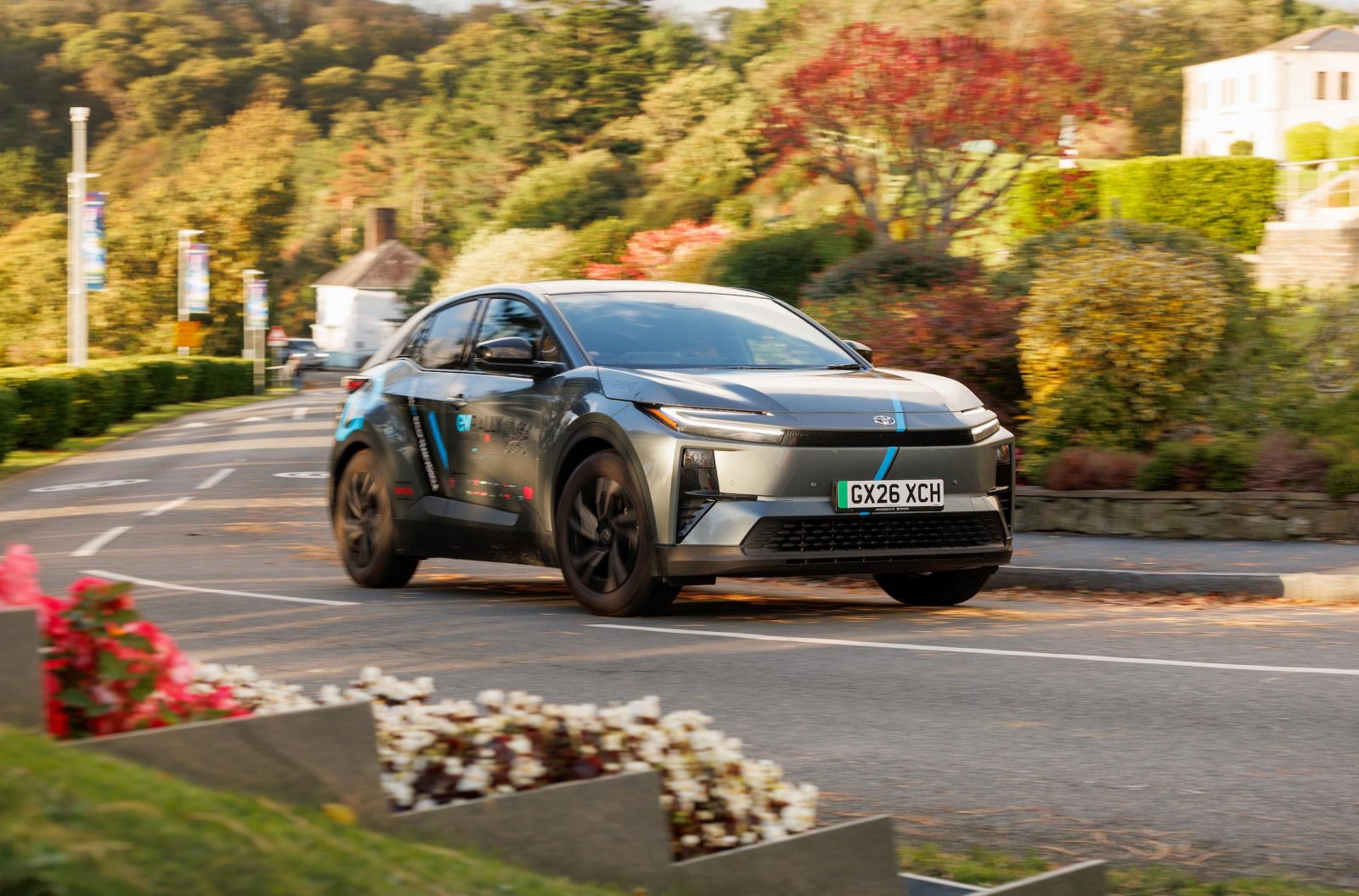
Toyota GB does not recommend extreme methods or radical driving styles to squeeze extra mileage from any of its vehicles, writes Rod Kirkpatrick. But I’m sitting in an electric car alongside a professional driver, Richard Seymour, and we are on a mission to discover just how far we can push Toyota C-HR+ efficiency in a completely standard car.
To be clear, this is not how you need to drive an electric car every day. But EV Rally Cymru is a two-day efficiency competition through Wales, and we want to win it.
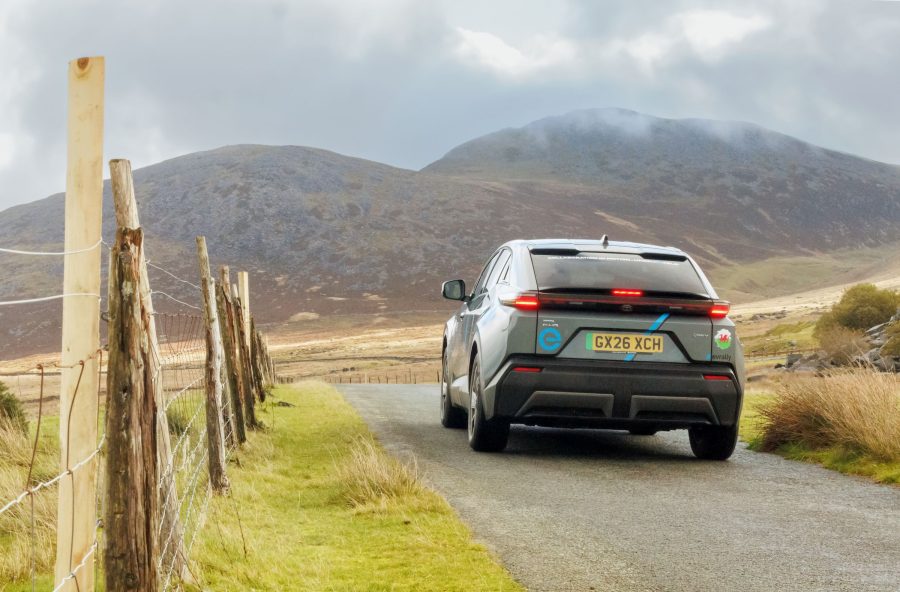
During day two, after climbing into Eryri and stopping high in the mountains, Richard becomes uncharacteristically quiet in the driver’s seat as we begin our descent towards the North Wales coast. There’s a broadening grin on his face as he keeps his attention firmly on the road ahead.
I glance at the instrument panel and immediately understand why: 99.9 miles/kWh is showing as our current efficiency. I have been watching this display obsessively for nearly two days, and the number has never been this high.
Click here to find out more about the all-electric Toyota C-HR+
The figure is, of course, far from representative of our overall efficiency. We are descending from the mountains, where regenerative braking allows the Toyota C-HR+ to recover energy as it slows. As the road levels out, the spectacular number begins to tumble back towards reality.
But for the moment, Richard looks delighted.
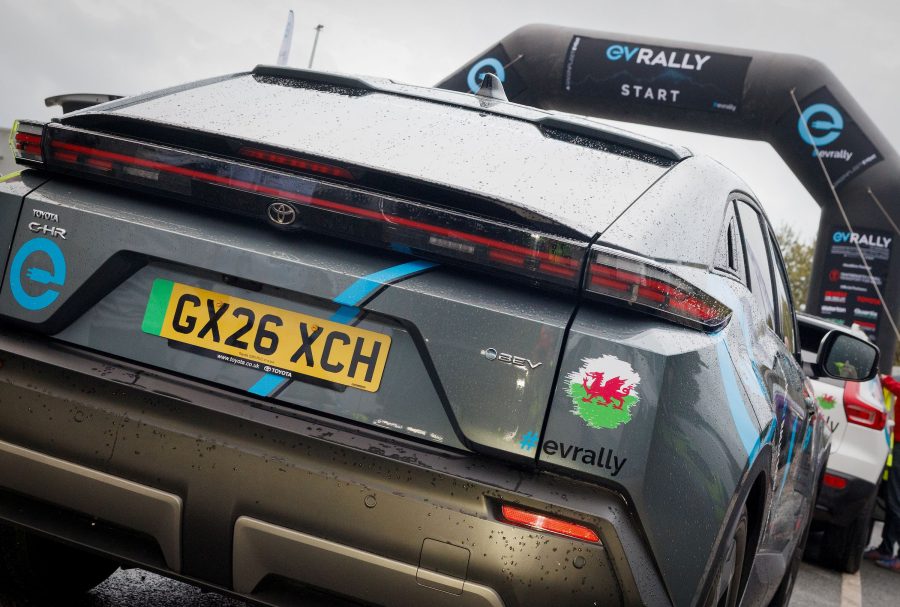
The previous morning, as we prepared for the start of the event, he had demanded that I find us a “mainly downhill” route. The tone of his voice and determined game face left me in no doubt how much he wanted to win. I knew my mission to find a contour-friendly route could be the difference between glory and defeat.
We were about to set off from the FSEW E-Freight Hub at Lamby Way in Cardiff on the first leg of a 385-mile journey across Wales. Day one would take us west via Cross Hands, into the dramatic landscape around Elan Valley, through Newtown and finally to the coast at Aberystwyth.
There may be plenty of roads here that glide effortlessly downhill, but they are matched by others that claw their way up some very grown-up hills and mountains.
Finding the flattest routes and driving the car as economically as possible was going to be a serious challenge.
How the Toyota C-HR+ is designed for efficiency
Before we are flagged away from the start line, Richard instructs me to put my cameras on the back seat and not use the boot.
“It’s powered by an electric motor. This competition is a game of marginal gains, so we have to use far less energy than any normal driver would ever use. We need to be super-mindful about how we’re using every kilowatt,” he explains.
“Don’t open your window either. It uses power and might mess up our aerodynamics.
“Also, you’ll need to keep your coat on. We’ll not be using the heater,” he laughs, as we silently edge our way into the Cardiff rush-hour traffic.
None of this is necessary in normal EV driving. We are competing, and Richard is looking for tiny savings that would make little practical difference to an everyday journey but might separate first place from second.
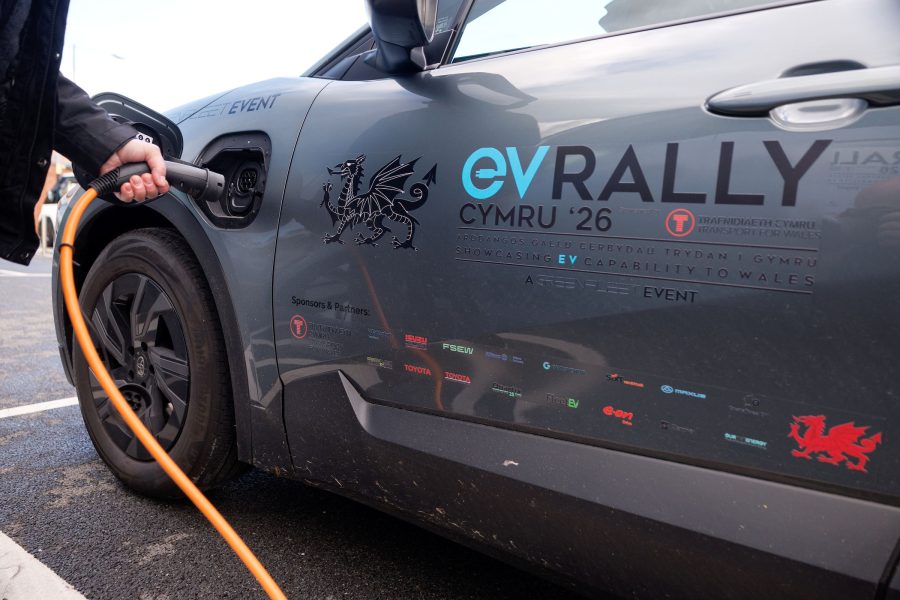
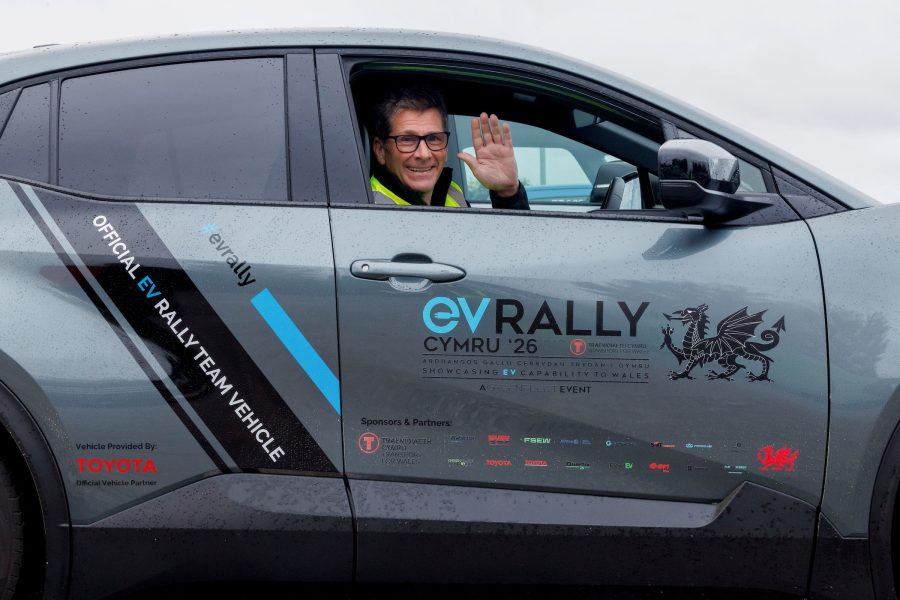
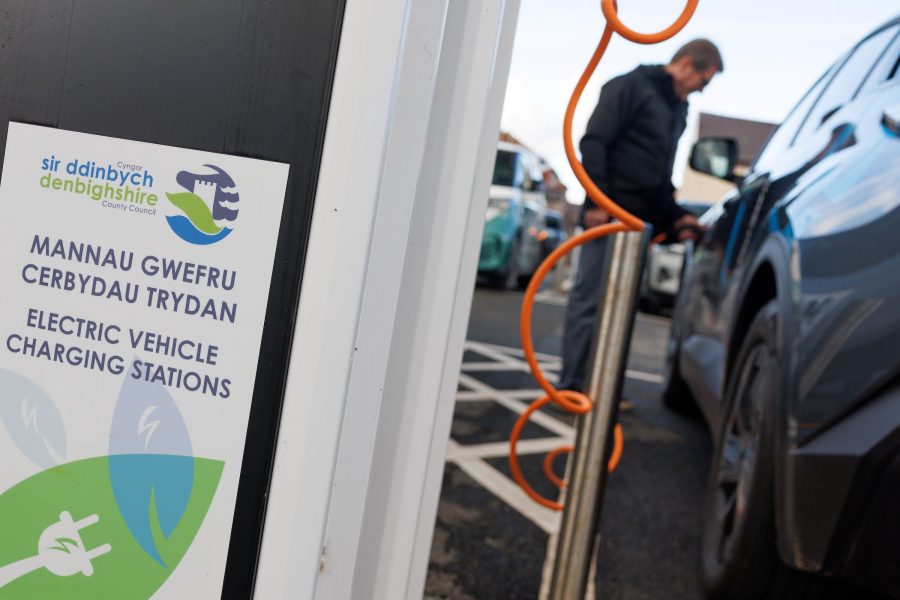
The two-day EV Rally Cymru is designed to showcase Welsh charging infrastructure and the capabilities of electric vehicles. Five daily checkpoints lead us, and 25 other electric cars, vans and lorries, to high-powered rapid-charging hubs across Wales, including locations in more remote rural areas. Toyota is an event sponsor and is also supplying the organisers with two Toyota bZ4X crew cars.
We don’t need to recharge the Toyota C-HR+ at these stops, but the charging hubs become natural meeting points along the route. As crews arrive, there’s time to compare cars, swap stories and talk to other EV drivers about their experiences. It’s a reminder that charging stops can be rather more sociable than a visit to the fuel pumps.
Richard’s sole mission is to extract more miles from every kilowatt-hour than anyone else.
My mission, aside from navigating, is to find attractive locations, sometimes off-route, and frequently ask Richard to stop so we can take photographs.
This could go badly.
Driving super-efficiently is an art form and Richard is an Old Master. His legendary right foot has helped him tiptoe his way to victory in numerous energy-saving challenges.
Our Toyota C-HR+ is a completely showroom-standard car with a 77kWh battery and 18-inch wheels. Its aerodynamic design contributes to a drag coefficient of 0.26.
Features that help the Toyota C-HR+ achieve this include:
- grille-less front end and active grille shutters to manage airflow at speed
- flat underfloor design and panelled underbody to minimise turbulence
- flush rear door handles
- aerodynamically optimised wheels
- roof-mounted spoiler, ducktail rear design and rear bumper fins
None of these features is there for the purposes of our efficiency challenge, of course. They are part of the standard Toyota C-HR+ design, helping to reduce aerodynamic drag and energy consumption in everyday driving.
Toyota C-HR+ efficiency in miles/kWh
As I wrestle with the rally roadbook, attempting to decipher the best route to the first checkpoints, I soon discover my map-reading skills are largely redundant. The Toyota C-HR+ navigation system quickly selects the fastest routes and, as chance would have it, what appear to be some of the flattest through the Welsh valleys.
For all our efforts to game the terrain, it is a useful reminder that driving an EV does not require specialist route-planning skills.
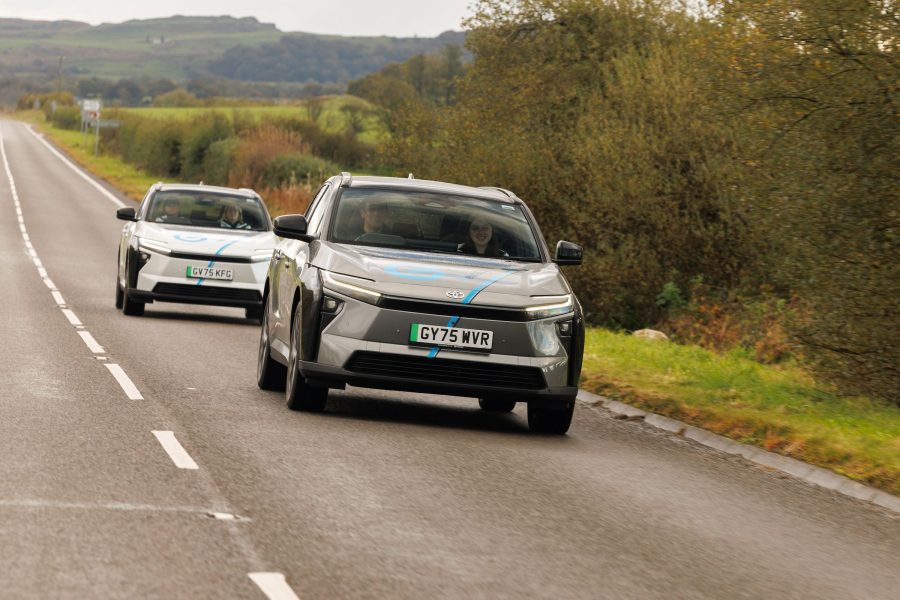
We begin reporting our energy use. Between checkpoints we are regularly achieving between 5 and 6 miles/kWh, sometimes more, considerably ahead of the Toyota C-HR+’s official efficiency figure of 4.64 miles/kWh.
These figures are more meaningful than the fleeting 99.9 miles/kWh we see on our mountainous descent. They show what sustained smooth driving, careful anticipation and energy recuperation can achieve.
Toyota C-HR+ range and charging
Despite our obsession with efficiency, range itself never becomes much of a concern.
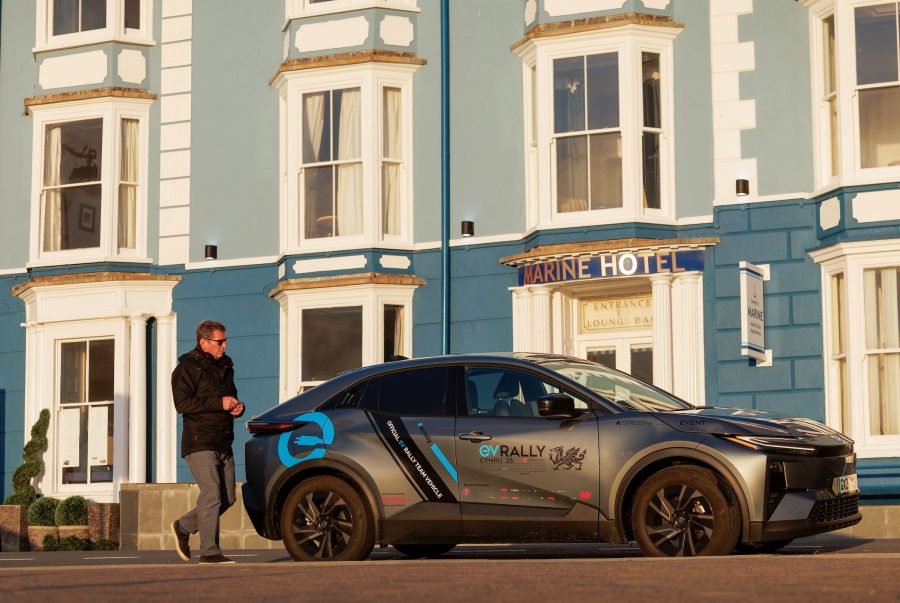
At the end of day one, after stops including Elan Valley and Newtown, we reach Aberystwyth. Following the final checkpoint at Aberystwyth Public Library, we charge the Toyota C-HR+ at our overnight stop at the Marine Hotel. With a WLTP driving range of up to 377 miles, it is the only battery top-up we need during the two-day event.
Day two takes us north from Aberystwyth towards Porthmadog before climbing into Eryri to reach the checkpoint at Marchlyn Mawr. From there, our journey continues towards Rhyl and Wrexham before the finish at Deeside.
It’s a route that takes us through some of the more remote and dramatic parts of Wales. We encounter charging infrastructure throughout the journey and meet plenty of other EV drivers using it, but never need to build our own route around a succession of charging stops.
While we are busy worrying about every last fraction of a kilowatt-hour, the Toyota C-HR+ is simply getting on with the journey.
What makes an EV more efficient?
As our descent from the Welsh mountains levels out, the 99.9 miles/kWh figure falls and Richard returns to his super-smooth driving technique.
Momentum is key.
He reads the road well ahead, accelerates smoothly and maintains momentum wherever conditions allow. Acceleration and speed are strictly rationed. As we leave one 20mph zone, I check to see whether any tractors or lorries are stuck behind us.
Nobody needs to go to these extremes on the morning commute. But there is a useful lesson beneath Richard’s competitive driving. Smooth acceleration and anticipation can reduce energy consumption, and the relationship between your right foot, the road ahead and efficiency quickly becomes intuitive in the Toyota C-HR+.
Just before we reach the finish at Toyota Motor Manufacturing UK’s Deeside engine plant, we are greeted by Elfyn Evans, Wales’s newly crowned World Rally Champion and Toyota Gazoo Racing driver.
He jumps into our car and, as he drives it across the line, says: “This is a little bit different to what I’m used to. It’s very comfortable.”
He politely forgets to mention the lingering odour left by two old blokes who have been sitting inside for two days with the windows firmly closed.
7.65 miles/kWh: the final result
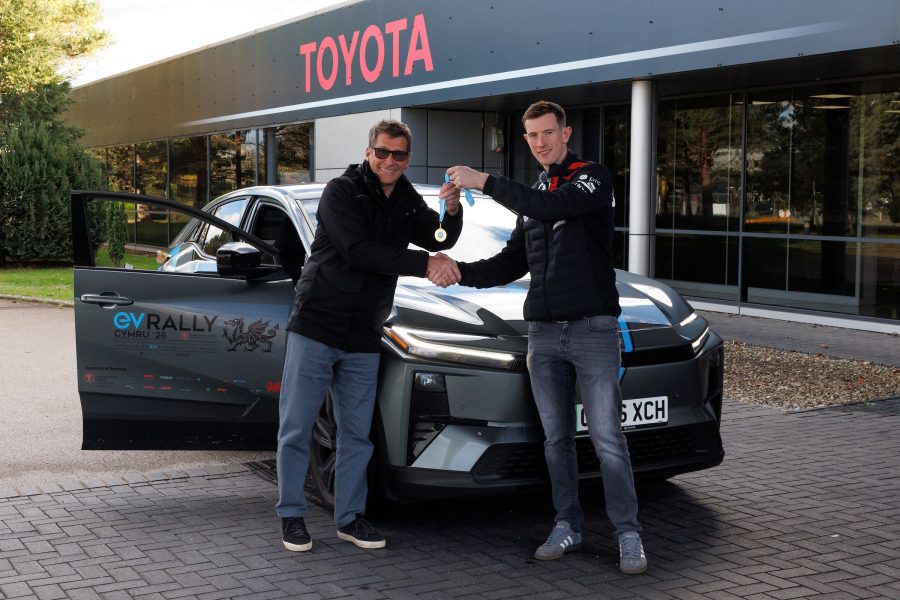
With an extraordinary event average of 7.65 miles/kWh, Richard and I win the competition.
See the verified results of the 2026 EV Rally Cymru by clicking here.
It is a figure achieved through careful route selection, favourable terrain, exceptionally smooth driving and energy-saving measures that no normal journey would demand. It is not intended to represent the efficiency every Toyota C-HR+ driver should expect.
But perhaps that is the most useful lesson from our 385 miles across Wales.
For two days, we have deliberately made driving an electric car more complicated than it needs to be. We have switched things off, monitored every kilowatt, studied the terrain and treated the accelerator pedal as though pressing it too firmly might personally offend Richard.
Underneath all that, the Toyota C-HR+ has simply got on with transporting us across Wales. Range hasn’t dominated the journey, charging hasn’t become an obstacle, and travelling by EV certainly hasn’t made the adventure any less enjoyable.
We are awarded a trophy and medals before heading off to a couple of well-deserved hotel rooms. With the competition finally over, we decide to return the Toyota C-HR+ to something approaching normal life. Just to check everything works, naturally.
Richard gives the horn a celebratory hoot or two. We switch on the heated seats and steering wheel, turn the fan to full blast, activate the heated door mirrors and rear-screen demister, turn the stereo up to 11 and fiddle with just about every other electric gizmo we can find.
After 385 miles spent worrying about every last watt, it feels magnificent.
Images: RKP Photography
Read more: Toyota bZ4X owner’s near 2000-mile journey